

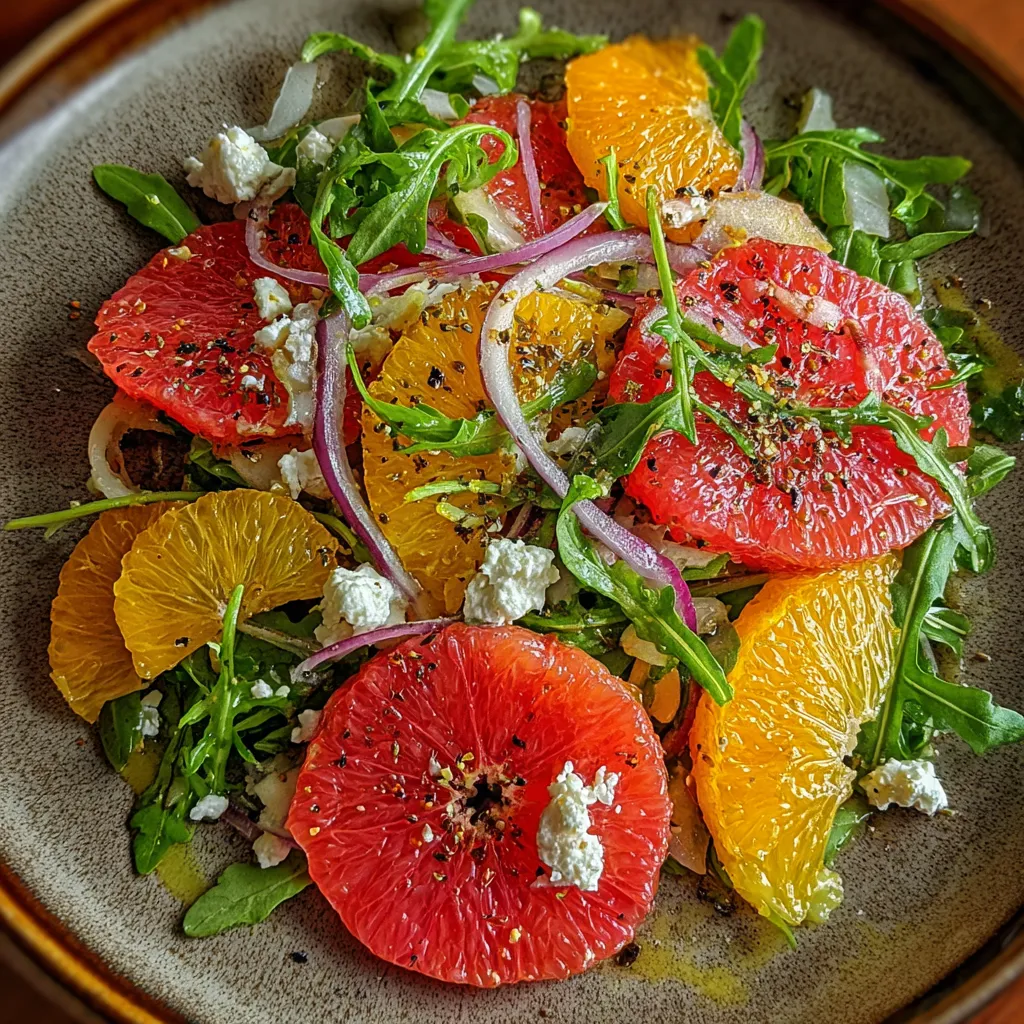
Arugula’s peppery crunch meets bright citrus in this Arugula Citrus Salad that’s as stunning on the table as it is on your taste buds. With sweet grapefruit and orange segments, crisp red onion ribbons, and creamy feta, every forkful bursts with vibrant contrasts. A simple honey-lemon vinaigrette ties it all together, making this salad a refreshing, effortless lunch—or a lively side for any meal. Give it a try and let those zesty flavors perk up your plate!
Key Ingredients
To build this vibrant salad, we rely on a handful of fresh, flavorful components that harmonize beautifully.
- 4 cups arugula: Peppery greens that form the crisp, lively base of the salad.
- 1 grapefruit: Sweet-tart fruit providing juicy, citrusy segments.
- 2 oranges: Adds bright, sweet notes and vibrant color contrast.
- 1/4 cup red onion: Sharp, crunchy ribbons that cut through the sweetness.
- 1/4 cup feta cheese: Creamy, salty crumbles offering tangy richness.
- 2 tablespoons extra virgin olive oil: Rich oil that brings body and helps emulsify the dressing.
- 1 tablespoon fresh lemon juice: Zesty acid that balances sweet and salty flavors.
- 1 teaspoon honey: Subtle sweetness to round out the tangy dressing.
- Salt: Enhances all the bright, natural flavors in the salad.
- Black pepper: Adds a touch of spice to complement the citrus and cheese.
How To Make Arugula Citrus Salad
Ready to toss together a salad that feels like sunshine on your plate? This section walks you through combining fresh greens, citrus segments, and a quick homemade dressing to achieve a perfect balance of flavors and textures. With just six straightforward steps, you’ll have a restaurant-worthy salad in under 15 minutes. Let’s get slicing, whisking, and tossing!
1. Peel and segment the citrus: Peel the grapefruit and oranges, carefully removing all pith and membrane. Slice between each membrane to release clean segments, catching any juices in a bowl to add into the dressing later.
2. Prepare the red onion: Thinly slice the red onion into delicate ribbons. This ensures a mild crunch without overpowering the salad. Set aside until assembly.
3. Whisk the dressing: In a small bowl, combine the olive oil, lemon juice, honey, salt, and black pepper. Whisk vigorously until the mixture emulsifies into a smooth, glossy vinaigrette.
4. Dress the arugula: Place the arugula in a large mixing bowl. Drizzle the vinaigrette evenly over the leaves, then gently toss with clean hands or salad tongs to coat each leaf.
5. Add the toppings: Scatter the citrus segments, sliced red onion, and crumbled feta cheese over the dressed arugula. Give everything a light toss to distribute the ingredients without bruising the greens.
6. Serve immediately: Transfer the salad to a serving platter or individual plates. Enjoy right away to maintain the crisp textures and vibrant colors.
Serving Suggestions
This Arugula Citrus Salad shines on its own but also plays well with others. Whether you’re crafting a light lunch or complementing a heartier entrée, these serving ideas will elevate your presentation and flavors.
- Pair with grilled chicken for a protein-powered lunch that balances peppery greens and smoky meat.
- Serve alongside pan-seared salmon to echo the citrus notes and add a rich, flaky texture.
- Place the salad on a layered platter with crusty bread and a cheese board for a casual, shareable spread.
- Top with toasted almonds or walnuts for an extra crunch and nutty nuance.
Tips For Perfect Arugula Citrus Salad
Getting this salad just right is all about choosing the freshest ingredients and timing your prep so everything stays crisp and bright. Here are some friendly pointers to help you achieve a salad that’s as delightful to eat as it is to look at.
- Use ripe, sweet citrus for the best flavor contrast
- For extra creaminess, add sliced avocado
- Goat cheese makes a great alternative to feta
- Serve the salad immediately to prevent the arugula from wilting
How To Store It
When life gives you leftovers, you don’t want wilted greens or soggy segments—so proper storage is key. These simple methods ensure your salad stays fresh, vibrant, and ready for a quick bite later.
- Store components separately: Keep arugula, citrus segments, and dressing in individual airtight containers to preserve textures.
- Refrigerate promptly: Place containers in the fridge at or below 40°F to slow down wilting and maintain crispness.
- Use crisping containers or line with a paper towel: This absorbs excess moisture, keeping arugula leaves from becoming soggy.
- Dress just before serving: Add vinaigrette only when you’re ready to eat, so the greens don’t lose their snap.
Frequently Asked Questions
Here are answers to common questions about making and enjoying your Arugula Citrus Salad.
- How long does it take to prepare this salad?
It takes about 15 minutes to prepare this salad. This includes peeling and segmenting the grapefruit and oranges (about 5–7 minutes), thinly slicing the red onion, and whisking together the dressing.
- What’s the best way to remove the pith and membrane from the grapefruit and oranges?
Use a sharp knife to cut off the top and bottom of each fruit so they sit flat. Then run the knife along the curve of the fruit between the white pith and the flesh, removing the pith. Finally, hold the fruit over a bowl and slice between the membranes to release clean segments.
- Can I prepare any components in advance?
Yes, you can segment the citrus and slice the red onion up to two hours ahead of time. Store them separately in airtight containers in the refrigerator. Whisk the dressing and toss everything together just before serving to keep the arugula crisp.
- How do I ensure the dressing emulsifies properly?
In a small bowl, combine the lemon juice, honey, salt, and pepper first. Then slowly drizzle in the olive oil while whisking vigorously until the mixture becomes smooth and well combined.
- Are there any ingredient substitutions or additions you recommend?
You can swap feta for goat cheese for a milder flavor or add sliced avocado for extra creaminess. If you’re out of arugula, a mix of baby greens works, though the peppery bite will be milder.
- What’s the best way to store leftovers?
Store the arugula, citrus segments, and dressing separately in airtight containers in the refrigerator for up to one day. Dress and assemble only when you’re ready to eat to prevent wilting.
- How should I serve this salad and what pairs well with it?
Transfer the tossed salad to a large platter and serve immediately. This bright, tangy salad pairs beautifully with grilled chicken, fish, or as a light first course alongside crusty bread.
What Makes This Special
This Arugula Citrus Salad works because it balances peppery, sweet, salty, and tangy in each bite—and it’s lightning-fast to assemble. It’s the kind of dish that looks like you spent hours crafting it, yet you’ll be digging in within minutes. Go ahead, print this article, tuck it into your recipe binder, and let it brighten up your lunch or dinner rotation. If you give it a whirl, drop a comment below—I’d love to hear how the flavors popped for you or help troubleshoot any citrus-segmenting questions!

Arugula Citrus Salad
Description
Fresh arugula leaves draped in sweet citrus segments mingle with crisp red onion ribbons and salty feta, all tied together by a bright honey-lemon dressing. Each bite is a vibrant, refreshing medley of zesty and peppery flavors.
Ingredients
Instructions
-
Peel the grapefruit and oranges, remove the pith and membrane, and cut into segments.
-
Thinly slice the red onion and set aside.
-
In a small bowl whisk together the olive oil, lemon juice, honey, salt, and black pepper until emulsified.
-
Place the arugula in a large bowl and drizzle with the dressing, tossing gently to coat.
-
Add the citrus segments, sliced red onion, and crumbled feta cheese to the arugula and toss lightly.
-
Transfer the salad to a serving platter and serve immediately.
Note
- Use ripe, sweet citrus for the best flavor contrast
- For extra creaminess, add sliced avocado
- Goat cheese makes a great alternative to feta
- Serve the salad immediately to prevent the arugula from wilting

