

Classic Spaghetti Bolognese is a soul-warming, hearty dinner that slowly simmers with carrots, celery, and a splash of red wine, coating each spaghetti strand in a rich, aromatic finish. Ground beef and pancetta mingle with garlic, wine, and tomatoes in this slow-cooked sauce, while a hint of milk creates a silky texture that clings to every al dente noodle. This Intermediate-level weeknight dinner is perfect for anyone craving a comforting, homemade sauce—grab your apron and let’s dive in!
Key Ingredients
Before you get started, let’s highlight the star players that make this Classic Spaghetti Bolognese so irresistible:
- 400 g dried spaghetti: Al dente noodles that soak up the flavorful Bolognese sauce.
- 2 tbsp olive oil: Rich fat that helps soften the soffritto and carry flavors.
- 1 tbsp unsalted butter (optional, for richness): Adds extra creaminess and depth to the base.
- 1 large yellow onion, finely diced: Sweet aromatics that form the flavor foundation.
- 2 medium carrots, finely diced: Natural sweetness and texture in the sauce.
- 2 celery ribs, finely diced: Earthy crunch that balances the sweetness of carrots.
- 3 cloves garlic, minced: Pungent kick that brightens every layer of the ragù.
- 500 g ground beef (80–90% lean): Hearty protein that browns to create savory depth.
- 100 g pancetta or streaky bacon, finely chopped (optional but traditional): Smoky richness for an authentic touch.
- 120 ml (1/2 cup) dry red wine: Deglazing liquid that lifts fond and adds acidity.
- 800 g canned crushed tomatoes or tomato passata: Tomato body that forms the lush sauce.
- 2 tbsp tomato paste: Concentrated tomato flavor that deepens the color and taste.
- 250 ml (1 cup) beef stock or water: Liquid base that keeps the sauce moist and flavorful.
- 150 ml (2/3 cup) whole milk or half-and-half: Silky finish that tames tomato acidity.
- 1 bay leaf: Subtle herbal note that infuses depth during the simmer.
- 1 tsp dried oregano: Savory herb that complements the tomato base.
- 1 tsp dried thyme or Italian seasoning: Aromatic blend for classic Italian flavor.
- 1/2 tsp sugar (optional, to balance acidity): Balances tomato sharpness when needed.
- Salt, to taste: Essential seasoning that brings out all flavors.
- Freshly ground black pepper, to taste: Adds a gentle warmth and spice.
- Pinch of red pepper flakes (optional, for gentle heat): A hint of kick if you like it spicy.
- Fresh basil or flat-leaf parsley, chopped, for serving: Bright, fresh garnish to finish each plate.
- 60–80 g freshly grated Parmesan cheese, plus extra for serving: Nutty, salty topping that melts slightly over the hot pasta.
How To Make Classic Spaghetti Bolognese
This Classic Spaghetti Bolognese comes together in layers, from the finely diced soffritto to the long, slow simmer that melds flavors into a velvet-like sauce. You’ll build your ragù by starting with aromatics, then browning meat, deglazing with red wine, and finally coaxing the tomatoes into a rich, fragrant base that finishes with a splash of milk. Once your sauce reaches peak creaminess, you’ll cook the spaghetti al dente and toss everything so each strand is lovingly coated in sauce.
1. Prepare the vegetables: Finely dice the onion, carrots, and celery into small, even pieces so they soften evenly and blend into the sauce. Then mince the garlic and, if using, finely chop the pancetta or bacon.
2. Start the base (soffritto): Heat the olive oil and butter in a large, heavy-bottomed pot over medium heat. Add the diced onion, carrot, and celery with a pinch of salt and cook, stirring occasionally, for 8–10 minutes until very soft and lightly golden. Lower the heat if any pieces start to brown too quickly. Add the minced garlic and cook for 30–60 seconds until fragrant.
3. Cook the pancetta and beef: Add the chopped pancetta or bacon (if using) and cook for 3–4 minutes until the fat renders and edges brown. Increase to medium-high heat, add the ground beef, season lightly with salt and pepper, and break it up with a wooden spoon. Cook for 6–8 minutes until the meat is no longer pink and some bits caramelize on the pot bottom.
4. Deglaze with wine: Pour in the red wine and stir well, scraping up any browned bits from the bottom. Let it simmer for 2–3 minutes until mostly evaporated but still moist.
5. Add tomatoes and seasonings: Stir in the tomato paste and cook for 1–2 minutes to caramelize it slightly. Add the crushed tomatoes or passata, beef stock (or water), bay leaf, dried oregano, thyme (or Italian seasoning), sugar (if using), and red pepper flakes (if using). Stir and bring to a gentle simmer.
6. Long, slow simmer: Reduce heat to low so the sauce barely bubbles. Partially cover with a lid left slightly ajar and simmer for at least 45–60 minutes, stirring every 10–15 minutes to prevent sticking. For deeper flavor, simmer up to 1.5–2 hours and add a splash of water or stock if it becomes too thick. Taste and adjust salt and pepper in the last 15 minutes.
7. Finish with milk: About 15 minutes before serving, stir in the milk or half-and-half and simmer gently, uncovered, until the sauce thickens again and turns silky. Remove and discard the bay leaf, then taste and adjust the seasoning one last time.
8. Cook the spaghetti: Bring a large pot of well-salted water to a rolling boil. Add the spaghetti and cook according to package instructions until al dente. Reserve 1 cup (240 ml) of pasta water, then drain the noodles.
9. Combine pasta and sauce: Return the drained spaghetti to the pot or a large serving bowl. Add 2–3 ladles of Bolognese sauce and a splash of reserved pasta water. Toss over low heat or stir thoroughly until each strand is evenly coated and glossy.
10. Serve: Plate the sauced spaghetti in warmed bowls, top with extra Bolognese sauce, sprinkle generously with freshly grated Parmesan, garnish with chopped basil or parsley, and finish with a crack of black pepper. Serve immediately with extra cheese on the side.
Serving Suggestions
Whether you’re dishing up a family dinner or feeding hungry guests, these serving ideas will elevate your Classic Spaghetti Bolognese:
- Garlic bread on the side: Serve warm slices of crusty bread rubbed with garlic and butter to soak up any leftover sauce.
- Fresh green salad: Pair with a crisp salad of mixed greens, cherry tomatoes, and a light vinaigrette to cut through the richness.
- Extra Parmesan topping: Offer a small bowl of grated Parmesan so everyone can adjust the cheesiness to their taste.
- A glass of red wine: Complement the sauce with a medium-bodied red like Chianti or Sangiovese for a classic Italian pairing.
Tips For Perfect Classic Spaghetti Bolognese
Mastering this recipe is all about patience, quality ingredients, and a few insider tricks. From choosing the right meat blend to letting your sauce slowly bubble away, these notes will help you craft a Bolognese that’s rich, balanced, and utterly delicious every time.
- For a more traditional texture, use a mix of ground beef and ground pork or veal.
- A longer simmer (up to 2 hours) deepens flavor; just keep the heat low and the sauce gently bubbling.
- Leftover Bolognese sauce freezes very well; cool completely, then store in airtight containers for up to 3 months.
- For a richer flavor, substitute some of the beef stock with a splash of beef broth concentrate or add a Parmesan rind during simmering (remove before serving).
- This sauce pairs beautifully not only with spaghetti but also with tagliatelle, pappardelle, or lasagna.
How To Store It
If you’re planning ahead or simply love leftovers, storing your Classic Spaghetti Bolognese correctly will keep it tasting fresh and flavorful:
- Refrigerate in airtight containers: Transfer cooled sauce and pasta separately to airtight containers. Keeps for up to 3–4 days.
- Freeze for long-term storage: Cool the sauce completely, then freeze in meal-sized portions. Use within 3 months for best quality.
- Thaw properly: Move frozen sauce to the fridge overnight, then reheat gently on the stove or in the microwave, adding a splash of water or stock if it thickens too much.
- Combine fresh when serving: If you stored pasta separately, briefly warm it in boiling water or the microwave, then toss with reheated sauce for a just-cooked texture.
Frequently Asked Questions
Here are answers to some common questions about Classic Spaghetti Bolognese:
- How long does it take to prepare and cook this Classic Spaghetti Bolognese?
From start to finish you’re looking at about 1 hour 45 minutes to 2 hours. Prep takes around 15–20 minutes for dicing the vegetables and measuring ingredients. Building the soffritto and browning meat takes roughly 25–30 minutes. You’ll then simmer the sauce for at least 45–60 minutes (up to 1.5–2 hours for deeper flavor), and finally cook the spaghetti and combine everything in about 10–12 minutes.
- What is the purpose of adding milk to the Bolognese sauce, and can I substitute it?
Stirring in whole milk or half-and-half about 15 minutes before the end of cooking softens the acidity of the tomatoes and enriches the texture, making the sauce silky and velvety. If you prefer, you can use light cream or a dairy-free cream alternative—just ensure it’s unsweetened and adds enough fat to mellow the tomato tang without thinning the sauce.
- How can I adjust the sauce consistency if it’s too thick or too thin?
If the sauce becomes too thick during a long simmer, add a splash of beef stock or reserved pasta cooking water to loosen it. If it’s too thin, continue simmering uncovered until it reduces to your desired thickness. Stir every 10–15 minutes to prevent sticking and check the consistency before adding milk near the end.
- Can I make this sauce ahead of time or freeze leftovers?
Yes. After cooking, cool the sauce completely then transfer it to airtight containers. It keeps in the refrigerator for up to 3–4 days or freezes for up to 3 months. To reheat, thaw in the fridge overnight (if frozen), then warm gently over low heat, stirring occasionally. You may need to add a little water or stock if it thickens too much.
- What can I use instead of red wine in the deglazing step?
If you prefer not to use alcohol, substitute an equal amount of beef stock with a teaspoon of balsamic or red wine vinegar to mimic the acidity. White wine works in a pinch, or you can use extra stock alone—just give the pan a good scrape to lift those caramelized bits for flavor.
- Can I vary the meat or pasta for this recipe?
Absolutely. For a more traditionally textured ragù, use a mix of ground beef, pork, or veal. Pancetta or bacon adds depth but can be omitted. While the recipe calls for spaghetti, it also pairs beautifully with tagliatelle, pappardelle, rigatoni, or even in lasagna layers—just adjust the cooking time per pasta type as needed.
- How do I deepen the flavor of the Bolognese without overcooking?
Extend the simmer to 1.5–2 hours, keeping the heat very low so the sauce barely bubbles. Stir in a Parmesan rind early in the simmer (remove before serving) and add a splash of concentrated beef broth if desired. Taste and adjust salt and pepper in the last 15 minutes, then finish with milk for a balanced, richly flavored sauce.
What Makes This Special
There’s something magically satisfying about watching humble ingredients transform into a soul-nourishing Classic Spaghetti Bolognese. Slow-simmered with love (and a splash of red wine!), it delivers deep, layered flavors and a velvety finish that clings to every noodle. Feel free to print and save this recipe card for those cozy weeknight dinners or special gatherings—then come back and let me know how it turned out! Questions, comments, or Bolognese triumphs? I’d love to hear all about your culinary adventures.
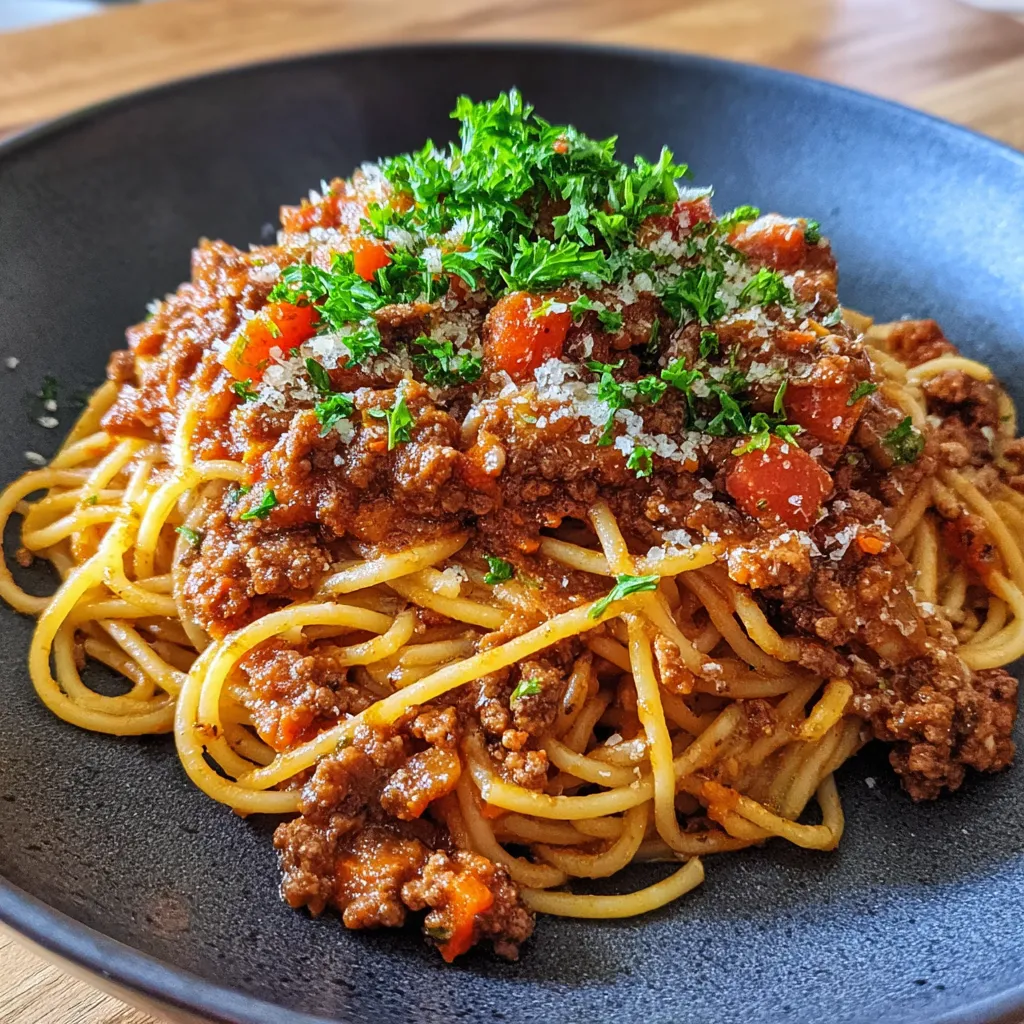

Classic Spaghetti Bolognese
Description
Ground beef and pancetta mingle with garlic, wine, and tomatoes in a slow-simmered sauce. A hint of milk creates a silky texture that clings to every al dente noodle, finishing with fresh basil and grated Parmesan.
Ingredients
Instructions
-
Prepare the vegetables:
-
- Finely dice the onion, carrots, and celery into small, even pieces so they soften evenly and blend into the sauce.
-
- Mince the garlic and finely chop the pancetta or bacon if using.
-
Start the base (soffritto):
-
- Heat the olive oil and butter in a large, heavy-bottomed pot or deep skillet over medium heat.
-
- Add the onion, carrot, and celery with a small pinch of salt.
-
- Cook, stirring occasionally, for 8–10 minutes until the vegetables are very soft and lightly golden but not browned or crisp. Lower the heat if they start to darken too quickly.
-
- Add the minced garlic and cook for 30–60 seconds until fragrant.
-
Cook the pancetta and beef:
-
- Add the chopped pancetta or bacon to the pot (if using) and cook for 3–4 minutes until the fat renders and the edges start to brown.
-
- Increase heat to medium-high. Add the ground beef, breaking it up with a wooden spoon into small pieces.
-
- Season lightly with salt and pepper.
-
- Cook for 6–8 minutes, stirring and breaking up any clumps, until the meat is no longer pink and has started to brown. Allow some bits to caramelize on the bottom of the pan for extra flavor.
-
Deglaze with wine:
-
- Pour in the red wine.
-
- Stir well, scraping up any browned bits from the bottom of the pot.
-
- Let the wine simmer and reduce for 2–3 minutes, until it has mostly evaporated but the mixture is still moist.
-
Add tomatoes and seasonings:
-
- Stir in the tomato paste and cook for 1–2 minutes to caramelize it slightly.
-
- Add the crushed tomatoes or passata and the beef stock (or water).
-
- Add the bay leaf, dried oregano, dried thyme or Italian seasoning, sugar (if using), and a small pinch of red pepper flakes if desired.
-
- Stir to combine, then bring the sauce to a gentle simmer.
-
Long, slow simmer:
-
- Reduce the heat to low so the sauce is just barely bubbling.
-
- Partially cover the pot with a lid, leaving it slightly ajar.
-
- Simmer for at least 45–60 minutes, stirring every 10–15 minutes to prevent sticking. For deeper flavor, continue simmering up to 1.5–2 hours, adding a splash of water or stock if it becomes too thick.
-
- Taste and adjust seasoning with salt and pepper during the last 15 minutes of cooking.
-
Finish with milk:
-
- About 15 minutes before serving, stir in the milk or half-and-half.
-
- Simmer gently, uncovered, stirring occasionally, until the sauce thickens again and becomes silky and rich.
-
- Remove the bay leaf and discard.
-
- Check seasoning one final time and adjust salt and pepper as needed.
-
Cook the spaghetti:
-
- Bring a large pot of well-salted water (it should taste pleasantly salty) to a rolling boil.
-
- Add the spaghetti and cook according to package instructions until al dente.
-
- Reserve about 1 cup (240 ml) of the starchy pasta cooking water, then drain the spaghetti.
-
Combine pasta and sauce:
-
- Return the drained spaghetti to the pot or place it in a large serving bowl.
-
- Add a generous amount of Bolognese sauce (start with about 2–3 ladles, adding more as needed) and a splash of reserved pasta water.
-
- Toss over low heat (if using the pot) or thoroughly in the bowl until the spaghetti is evenly coated and glossy. The pasta water will help the sauce cling.
-
Serve:
-
- Plate the sauced spaghetti in warm bowls.
-
- Spoon a little extra Bolognese on top of each portion.
-
- Sprinkle generously with freshly grated Parmesan cheese.
-
- Garnish with chopped fresh basil or parsley and a grind of black pepper.
-
- Serve immediately with extra Parmesan on the side.
Note
- For a more traditional texture, use a mix of ground beef and ground pork or veal.
- A longer simmer (up to 2 hours) deepens flavor; just keep the heat low and the sauce gently bubbling.
- Leftover Bolognese sauce freezes very well; cool completely, then store in airtight containers for up to 3 months.
- For a richer flavor, substitute some of the beef stock with a splash of beef broth concentrate or add a Parmesan rind during simmering (remove before serving).
- This sauce pairs beautifully not only with spaghetti but also with tagliatelle, pappardelle, or lasagna.

