

Wake up your weekend with a burst of kitchen theater—Dutch baby pancakes bring big puffs, crisp golden edges, and a tender custardy center that’s simply irresistible. With just a handful of everyday ingredients and a hot skillet, you’ll whip up a breakfast that looks and tastes like a showstopper. Give it a try, gather your favorite toppings, and get ready to amaze everyone at your table!
Key Ingredients
Start with simple pantry staples that transform into a dramatic, puffy delight once they hit the oven.
- 3 large eggs: Whisked to frothy perfection, they set the custardy base and help the pancake rise dramatically.
- ½ cup all-purpose flour: Provides structure and lightness, creating a tender crumb in every bite.
- ½ cup whole milk: Adds richness and moisture, ensuring a creamy interior.
- ¼ teaspoon salt: Enhances all the flavors, balancing sweetness and depth.
- 2 tablespoons granulated sugar: Offers a hint of sweetness and helps achieve golden edges.
- ½ teaspoon vanilla extract: Infuses a warm, aromatic note throughout the batter.
- 2 tablespoons unsalted butter: Melts to coat the skillet, giving crisp, lacy edges and buttery taste.
- Optional toppings: Powdered sugar, fresh fruit, syrup, lemon juice, or whipped cream to customize every mouthful with extra flavor and texture.
How To Make Dutch Baby Pancakes
Ready to turn those ingredients into a sky-high breakfast star? Follow these steps closely to ensure your Dutch baby soars, with every whisk, swirl, and bake timed to perfection.
1. Preheat the oven and skillet
Heat your oven to 425°F (220°C), placing a cast-iron skillet or oven-safe pan inside. A fully heated pan is key to that dramatic puff.
2. Whisk the eggs
In a large bowl, beat the eggs vigorously until they’re frothy and pale, about 1–2 minutes. This introduces air that fuels the rise.
3. Combine the batter
Add the flour, milk, salt, sugar, and vanilla to the eggs. Whisk until the mixture is smooth and free of lumps, creating a silky batter.
4. Melt the butter
Carefully remove the hot skillet with oven mitts, add the unsalted butter, and swirl until it’s completely melted, coating the bottom and sides.
5. Pour the batter
Immediately pour your batter into the sizzling pan, tilting it so the mixture spreads evenly.
6. Bake without peeking
Return the skillet to the oven and bake 20–25 minutes until the edges are puffed and golden brown. Resist opening the door, or it may deflate.
7. Cool briefly
Remove from the oven and let the pancake rest for a minute to stabilize before slicing.
8. Serve at once
Top with powdered sugar, fruit, syrup, lemon juice, or whipped cream while it’s still puffed for maximum wow factor.
Serving Suggestions
Once your Dutch baby emerges tall and golden, it’s time to decide how to plate it for maximum enjoyment. Whether you love the sweet simplicity of powdered sugar or crave a protein-packed breakfast, these serving ideas will take your skillet showstopper to new heights. From bright citrus to cozy comforts, you can tailor each slice for family brunches or lazy mornings, finding the perfect balance of flavors and textures in every forkful.
- Lemon & Powdered Sugar: Dust generously with powdered sugar and squeeze fresh lemon juice over the hot pancake for a light, tangy contrast that highlights the crisp, golden edges.
- Fresh Berry Medley: Top with a vibrant mix of strawberries, blueberries, and raspberries for a burst of color and natural sweetness against the tender custard interior.
- Maple Syrup Drizzle: Warm maple syrup and pour in a slow spiral to coat the center, letting it pool in the golden walls for sticky, sweet pockets.
- Savory Twist: Sprinkle shredded cheese, chopped herbs, and crispy bacon bits on one half of the pancake right out of the oven for a delicious contrast of flavors and textures.
Tips For Perfect Dutch Baby Pancakes
If you want your Dutch baby to soar like a champion and stay pillowy soft, these pointers are your secret weapons. A few tweaks—like nailing the batter consistency, preheating properly, and choosing fresh toppings—can make each pancake fluffier, tastier, and more reliable. Watch your oven temperature, handle the skillet with care, and serve immediately for the best show. Now, let’s dial in every detail so your breakfast looks and tastes like a five-star performance.
- The Dutch baby pancake is known for its dramatic rise and fluffy texture, making it fun to watch as it bakes.
- Experiment with different flavor variations by adding spices like cinnamon or nutmeg to the batter.
- For a savory twist, consider adding cheese or herbs to the batter before baking.
- This dish is best served immediately, as it will start to deflate after a few minutes.
- Pair it with crispy bacon or sausage for a hearty breakfast experience.
How To Store It
Leftover Dutch baby slices can still shine the next morning when stored with care. Proper cooling and airtight containment help maintain those crisp edges and tender insides. Whether you plan to refrigerate, freeze, or reheat, following these simple steps will keep your pancake from turning soggy, ensuring each bite stays deliciously light.
- Refrigerate: Allow the pancake to cool completely, then place slices in an airtight container for up to 24 hours to preserve freshness and prevent moisture loss.
- Reheat in Oven: Preheat to 350°F (175°C). Arrange slices on a baking sheet and warm for 5–7 minutes to restore crisp edges without sogginess.
- Freeze for Longer Storage: Wrap individual slices tightly in plastic wrap and place them in a freezer-safe bag for up to one month. Thaw overnight in the fridge before reheating.
- Avoid Microwave: Microwaving can make the pancake soggy; sticking to oven methods helps maintain the ideal texture.
Frequently Asked Questions
Got questions? Here are a few quick answers to help you nail that perfect pancake.
- How long does it take to prepare and bake Dutch baby pancakes?
The total time is about 30 minutes. It takes roughly 5 minutes to gather and measure your ingredients, 5 minutes to whisk the batter smooth, 5 minutes to preheat the oven and skillet, and 20–25 minutes to bake until puffed and golden.
- Why is it important to preheat the cast-iron skillet or oven-safe pan?
Preheating the skillet ensures the butter sizzles immediately and creates steam that helps the pancake rise dramatically. A cold pan will result in a denser, less puffy pancake and an uneven bake.
- What can I do if my Dutch baby deflates quickly after removing it from the oven?
Dutch babies naturally start to deflate as they cool. To minimize rapid collapse, serve immediately while still hot and avoid opening the oven door during baking. If desired, keep it in the oven (turned off) for a minute before slicing.
- Can I substitute ingredients, like using gluten-free flour or non-dairy milk?
Yes, you can replace all-purpose flour with a 1:1 gluten-free baking blend, though the texture may be slightly different. Whole milk can be swapped with almond, oat, or soy milk, but choose unsweetened versions to control sweetness. Adjust liquid amounts slightly if the batter seems too thin or thick.
- How can I customize the flavor of my Dutch baby pancake?
For a sweet twist, whisk in ½ teaspoon of cinnamon or nutmeg, or fold in lemon zest. For savory versions, omit sugar and vanilla, then add grated cheese, chopped herbs like chives or parsley, or cooked bacon bits directly into the batter before baking.
- What are the best toppings to complement a Dutch baby?
Traditional toppings include a dusting of powdered sugar and a squeeze of lemon juice. Fresh berries, sliced stone fruits, or a warm fruit compote add brightness. For richer options, serve with maple syrup, whipped cream, or a drizzle of chocolate sauce.
- How do I store and reheat leftovers, if any remain?
Store cooled Dutch baby slices in an airtight container in the refrigerator for up to 24 hours. Reheat on a baking sheet in a 350°F (175°C) oven for 5–7 minutes to restore crisp edges. Avoid the microwave, as it will make the pancake soggy.
What Makes This Special
Ready to bring breakfast theater into your kitchen? The secret behind this showstopping Dutch baby pancake is a blazing-hot skillet, simple pantry staples, and just the right whisking technique. The result is a pancake that puffs sky-high with crisp, lacy edges and a custardy center that begs for your favorite toppings. Jot down, print, or bookmark this recipe so it’s always at your fingertips come morning. Once you’ve given it a whirl, drop a comment with your tweaks, successes, or questions—I can’t wait to hear how your pancake puff fared!
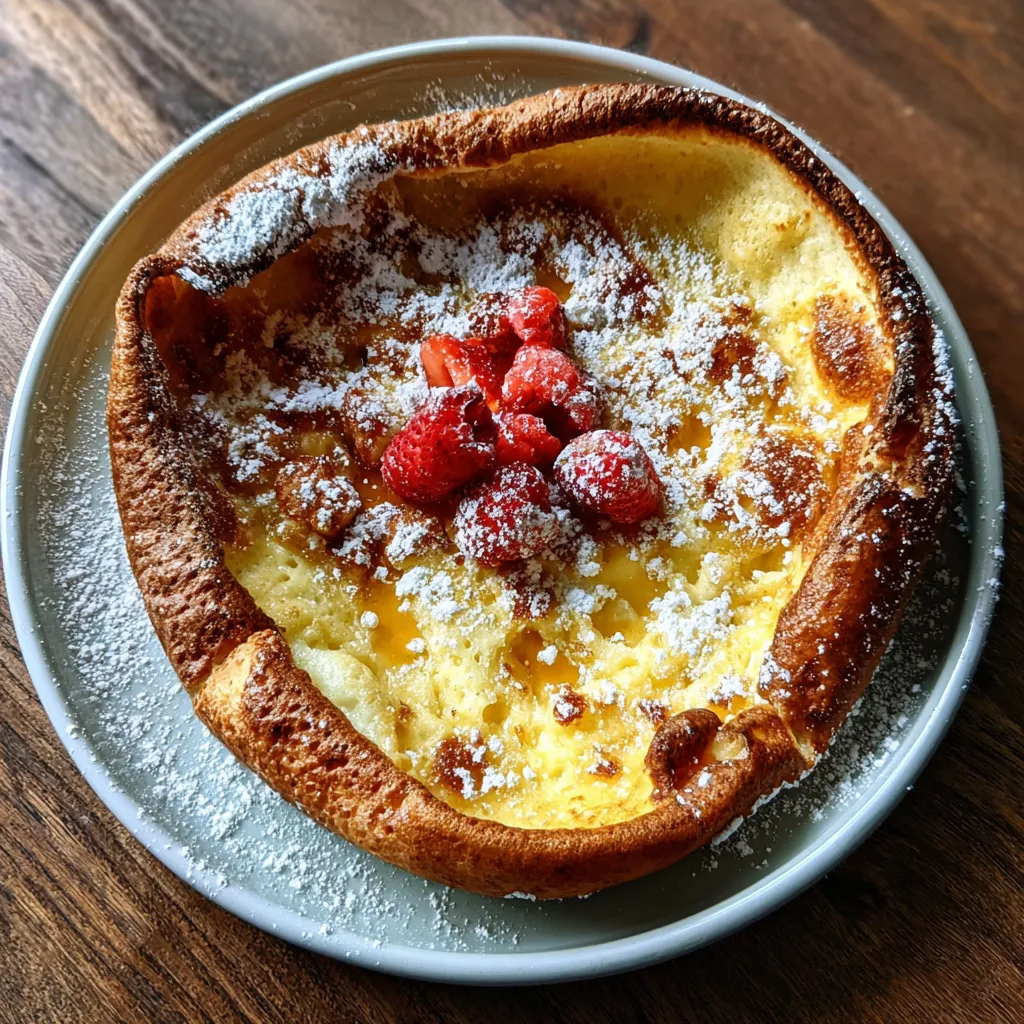

Dutch Baby Pancakes
Description
This Dutch baby emerges from the oven with puffed, golden walls and a custardy center, ready to cradle berries, syrup, or a squeeze of lemon. Crisp edges, tender interior—breakfast theater at its finest.
Ingredients
Instructions
-
Preheat your oven to 425°F (220°C). Make sure to place a cast-iron skillet or an oven-safe frying pan inside the oven while it preheats. This will ensure the pan gets nice and hot.
-
In a large mixing bowl, whisk together the eggs until they are well beaten and frothy, about 1-2 minutes.
-
Add the all-purpose flour, whole milk, salt, granulated sugar, and vanilla extract to the bowl with the beaten eggs. Whisk everything together until the batter is smooth and free of lumps.
-
Once the oven reaches the correct temperature, carefully remove the hot skillet from the oven using oven mitts. Add the unsalted butter to the skillet and let it melt completely, swirling the pan to coat the bottom and sides.
-
Pour the batter into the hot skillet right after the butter has melted, ensuring it spreads evenly across the pan.
-
Immediately return the skillet to the oven and bake for 20-25 minutes, or until the sides are puffed and golden brown. Avoid opening the oven door during baking, as this can cause the pancake to deflate.
-
Once cooked, remove the Dutch baby from the oven, and let it cool slightly before slicing.
-
Serve immediately, topped with your choice of powdered sugar, fresh fruit, syrup, lemon juice, or whipped cream.
Note
- The Dutch baby pancake is known for its dramatic rise and fluffy texture, making it fun to watch as it bakes.
- Experiment with different flavor variations by adding spices like cinnamon or nutmeg to the batter.
- For a savory twist, consider adding cheese or herbs to the batter before baking.
- This dish is best served immediately, as it will start to deflate after a few minutes.
- Pair it with crispy bacon or sausage for a hearty breakfast experience.

