

Greek Asparagus Salad brings together tender asparagus spears with juicy cherry tomatoes, salty Kalamata olives, and creamy feta, all tossed in a zesty red wine vinaigrette. Bright asparagus meets tangy cheese and briny olives for a crunchy Mediterranean salad that pops with fresh dill, making each bite a celebration of crisp, vibrant flavors. Perfect for busy weeknights or a light lunch, this beginner-friendly dish delivers a tender snap and refreshing finish you’ll want on repeat.
Key Ingredients
Let’s dive into the fresh produce and pantry staples that make this salad shine:
- 1 lb asparagus: Provides a crisp, vibrant base with a tender snap.
- 1 cup cherry tomatoes: Adds juicy sweetness and bright color.
- 1/2 cup red onion: Contributes sharpness and a mild bite.
- 1/2 cup Kalamata olives: Brings briny, savory depth.
- 1/2 cup feta cheese: Offers creamy, tangy richness.
- 1 tbsp fresh dill: Lends grassy, aromatic freshness.
- 3 tbsp olive oil: Serves as the rich, smooth salad dressing base.
- 2 tbsp red wine vinegar: Delivers zesty acidity for balance.
- 1 tsp Dijon mustard: Acts as an emulsifier and adds subtle heat.
- 1 clove garlic: Infuses pungent, savory flavor.
- 1/2 tsp salt: Enhances all the natural flavors.
- 1/4 tsp black pepper: Provides a gentle, warm kick.
How To Make Greek Asparagus Salad
Creating this Greek Asparagus Salad is a breeze—just a quick blanch for the asparagus, simple chopping, and a homemade vinaigrette. In under 30 minutes, you’ll have a vibrant bowl full of contrasting textures and bright tastes. Let’s walk through each step so you can nail every detail and serve an eye-catching Mediterranean classic.
1. Trim woody ends from the asparagus and cut into 2-inch pieces to ensure even cooking and easy bites.
2. Bring a pot of generously salted water to a rolling boil, add the asparagus, and blanch for 2 minutes. Immediately transfer to a large ice bath to halt cooking, then drain thoroughly to preserve that satisfying crunch.
3. Meanwhile, halve the cherry tomatoes, thinly slice the red onion, and halve the Kalamata olives, preparing a colorful mix of juicy and briny components.
4. Mince the garlic finely, then whisk together olive oil, red wine vinegar, Dijon mustard, salt, pepper, and garlic in a small bowl until the dressing is smooth and emulsified.
5. In a large bowl, combine the cooled asparagus, tomatoes, onion, and olives, creating an even distribution of textures.
6. Pour the dressing over the salad components and toss gently to coat every piece evenly with that zesty vinaigrette.
7. Crumble the feta cheese over the dressed salad and sprinkle with fresh dill for that final burst of tangy creaminess and herbal brightness.
8. Give the salad one last gentle toss, then serve immediately for peak freshness or chill briefly for an invigorating cold salad.
Serving Suggestions
Whether you’re enjoying this Greek Asparagus Salad on its own or pairing it with other dishes, it shines no matter what! This salad’s crisp textures and bright flavors make it an ideal side or a light main. Here are four ideas to get the most out of every bite:
- As a lunch bowl: Serve over a bed of mixed greens for a heartier midday meal, adding cooked quinoa or farro to boost the protein and fiber.
- With grilled protein: Pair alongside grilled chicken, fish, or shrimp to complement the smoky flavors with tangy, fresh salad notes.
- In lettuce wraps: Scoop the mixture into large butter lettuce leaves for a fun, handheld appetizer or light dinner that’s perfect for gatherings.
- On toast: Top thick slices of crusty bread with this salad and a drizzle of extra olive oil for a crunchy, Mediterranean-inspired bruschetta.
Tips For Perfect Greek Asparagus Salad
Master these friendly pointers to elevate your salad from great to extraordinary. With a few simple tweaks, you’ll be that friend everyone asks for the recipe!
- To ensure crisp asparagus, avoid overcooking during the blanching step by timing it precisely and shocking in ice water.
- Substitute fresh parsley for dill if desired; parsley brings its own bright, herbaceous profile.
- Store leftovers in an airtight container in the refrigerator for up to 2 days to keep flavors fresh and textures intact.
- Add a squeeze of lemon juice for extra brightness whenever you need a zesty lift.
How To Store It
Once you’ve whipped up this salad, keep its fresh crunch and vibrant flavors intact with proper storage. Whether you’re prepping ahead or saving leftovers, these methods will help maintain peak taste:
- Store in an airtight container in the refrigerator for up to 2 days, ensuring minimal air exposure.
- Keep the dressing separate in a small jar to prevent the vegetables from becoming soggy if you plan to enjoy it later.
- Add feta cheese and fresh dill just before serving if prepping ahead, preserving their texture and color.
- Use a shallow container to help the salad cool quickly and evenly for optimal crunch.
Frequently Asked Questions
Here are answers to common questions so your Greek Asparagus Salad turns out perfectly every time:
- Q: How long does it take to prepare this Greek Asparagus Salad?
A: It takes about 20–25 minutes from start to finish. This includes 5 minutes to trim and cut the asparagus, 2 minutes to blanch it, about 5 minutes to chop and halve the tomatoes, onion, and olives, 3 minutes to whisk the dressing, and another 5–10 minutes to toss everything together and finish with feta and dill.
- Q: What’s the best way to blanch asparagus for maximum crispness?
A: Bring a pot of generously salted water to a rolling boil, add the asparagus pieces for exactly 2 minutes, then immediately transfer them to a large ice bath to halt cooking. This process locks in bright color and crunch. After a minute in the ice bath, drain thoroughly so excess water doesn’t dilute the dressing.
- Q: Can I make this salad ahead of time and how should I store it?
A: Yes, you can prepare the salad up to step 6, toss with dressing, then store in an airtight container in the refrigerator for up to 2 days. Add the crumbled feta and fresh dill just before serving to keep the cheese from becoming soggy and the herbs vibrant.
- Q: What substitutions or additions work well if I don’t have dill or feta?
A: If you’re out of dill, fresh parsley makes an excellent substitute with a slightly different but refreshing flavor. For dairy-free or vegan diets, use a plant-based feta alternative or omit the cheese and add extra olives or a sprinkle of toasted nuts for texture.
- Q: How can I adjust the seasoning if the salad tastes too salty or sharp?
A: If it’s too salty, rinse the Kalamata olives under cold water and reduce added salt in the dressing. To tame sharpness from the vinegar or onion, add a squeeze of lemon juice or a touch more olive oil to balance acidity and mellow flavors.
- Q: Is this salad better served warm, room temperature, or chilled?
A: While it’s traditionally served chilled or at room temperature to showcase crisp asparagus and cold feta, you can enjoy it slightly warm by tossing the hot, drained asparagus with the dressing and letting it sit for a few minutes before adding the remaining ingredients.
What Makes This Special
This Greek Asparagus Salad works because it balances textures—crisp spears, juicy tomatoes, and creamy feta—with bold Mediterranean flavors from olives, dill, and a tangy red wine vinaigrette. It’s as simple as blanch-and-toss, yet it feels gourmet every time. Feel free to print this recipe and save it for your weekly meal rotation. If you give it a spin, drop a comment below or let me know how it goes—questions and feedback are always welcome!
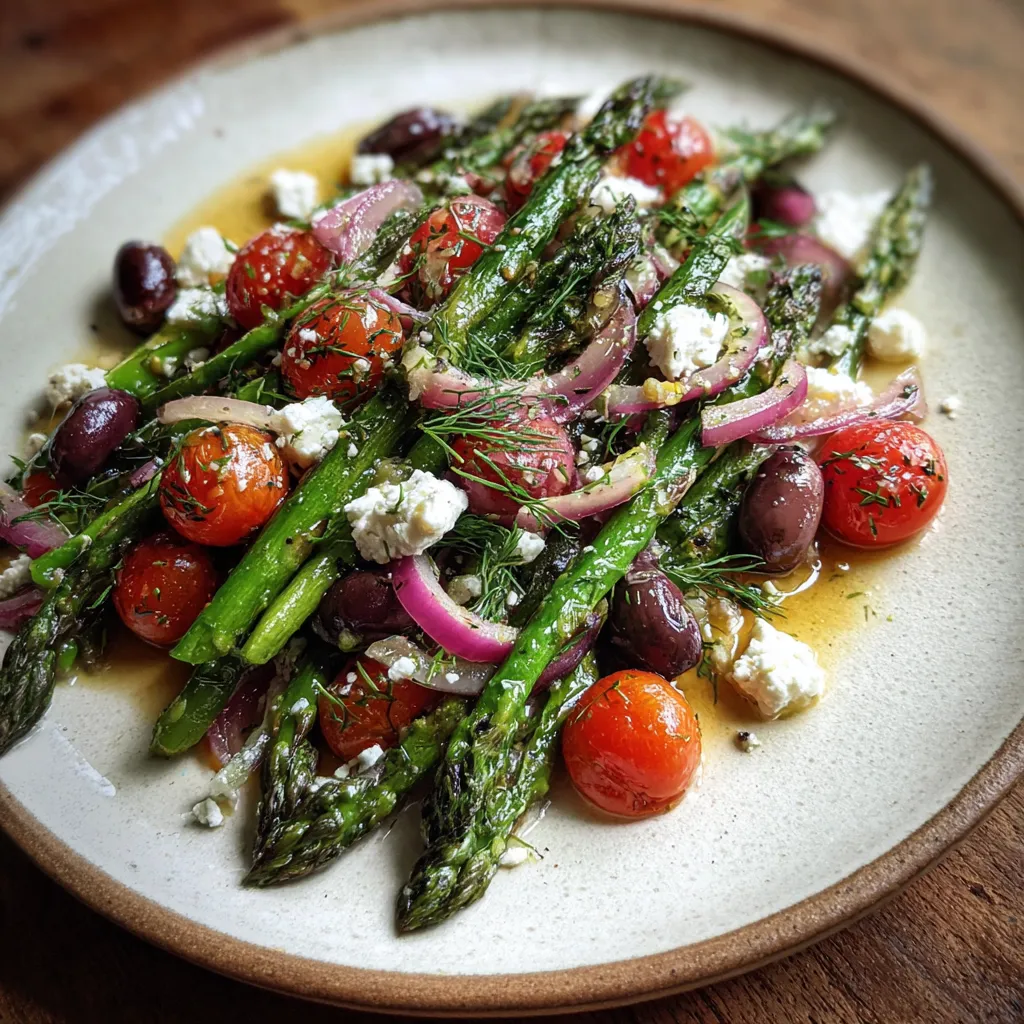

Greek Asparagus Salad
Description
Crisp asparagus spears deliver a tender snap, mingling with juicy cherry tomatoes, salty olives, and creamy feta as a tangy red wine vinaigrette coats each vibrant bite.
Ingredients
Instructions
-
Trim woody ends from asparagus and cut into 2-inch pieces.
-
Bring a pot of salted water to a boil, add asparagus and blanch for 2 minutes, then transfer to an ice bath and drain.
-
Meanwhile, halve the cherry tomatoes, thinly slice the red onion, and halve the Kalamata olives.
-
Mince the garlic and whisk together olive oil, red wine vinegar, Dijon mustard, salt, pepper, and garlic in a small bowl.
-
In a large bowl combine the cooled asparagus, tomatoes, onion, and olives.
-
Pour the dressing over the salad components and toss to coat evenly.
-
Crumble the feta cheese over the salad and sprinkle with fresh dill.
-
Gently toss once more and serve immediately or chill for later.
Note
- To ensure crisp asparagus, avoid overcooking during the blanching step.
- Substitute fresh parsley for dill if desired.
- Store leftovers in an airtight container in the refrigerator for up to 2 days.
- Add a squeeze of lemon juice for extra brightness.

