

Japanese Strawberry Cake is a classic Japanese sponge cake layered with cloud-like whipped cream and ripe strawberry bursts. A feather-light sponge bakes to golden perfection, then surrenders to clouds of sweetened cream and jewels of fresh strawberries. Every forkful offers a soft, airy crumb and bright, juicy fruit for pure taste bliss. If you love light desserts that look as good as they taste, you’re in the right place!
Key Ingredients
Here’s the ingredient lineup that makes this cake so special—simple pantry staples and fresh strawberries come together to create something truly magical.
- 4 large egg whites: Whipped into a meringue base that provides volume and airy structure.
- 4 large egg yolks: Enrich the batter with a tender crumb and a hint of buttery flavor.
- 80 grams cake flour: Forms the delicate framework of the sponge with a light texture.
- 20 grams cornstarch: Lightens the cake even more by softening the flour’s protein content.
- 100 grams granulated sugar: Sweetens the sponge and stabilizes the meringue for glossy peaks.
- 20 grams unsalted butter: Adds moisture, richness, and a silky mouthfeel.
- 100 ml whole milk: Creates a tender crumb and helps dissolve the melted butter evenly.
- 300 ml heavy cream: Whipped into fluffy clouds for the cake’s luscious filling and coating.
- 30 grams powdered sugar: Sweetens the whipped cream without any grittiness.
- 1 teaspoon vanilla extract: Enhances the overall flavor with fragrant warmth.
- 200 grams fresh strawberries for filling: Bright, juicy fruit layers that cut through the cream.
- 12 medium fresh strawberries for decoration: Fresh garnish that adds visual appeal and a pop of flavor.
How To Make Japanese Strawberry Cake
Baking this Japanese Strawberry Cake is all about gentle folding, precise temperatures, and patience. You’ll whip a fluffy meringue, blend a silky yolk batter, and end up with a golden sponge that supports clouds of whipped cream and juicy strawberry slices. Follow each step carefully to achieve a light, airy texture and flawless layers.
1. Preheat the oven to 170°C and line an 18 cm round cake pan with parchment paper, ensuring an even rise.
2. Sift together the cake flour and cornstarch into a bowl, breaking up any lumps for a smooth batter.
3. Melt the butter over low heat, then stir in warm milk until fully combined; set aside to cool slightly.
4. Whisk the egg whites in a clean bowl until foamy, then gradually add granulated sugar and beat to stiff peaks.
5. In a separate bowl, whisk the egg yolks with vanilla extract until the mixture is pale and slightly thickened.
6. Gently fold the sifted flour mixture into the egg yolk mixture, then carefully fold in the cooled butter–milk mixture.
7. Fold one third of the meringue into the batter to lighten it, then fold in the remaining meringue in two batches until just combined.
8. Pour the batter into the prepared pan and bake for 25 to 30 minutes, or until the top is golden and a skewer comes out clean.
9. Allow the sponge to cool completely on a wire rack, then slice it horizontally into two even layers using a long serrated knife.
10. Whip the heavy cream with powdered sugar to soft peaks, spread half the cream on the bottom layer, arrange sliced strawberries, then top with the second sponge layer, cover with remaining cream, and decorate with whole strawberries.
11. Chill the cake in the refrigerator for at least 2 hours before slicing and serving for clean cuts and a set filling.
Serving Suggestions
This Japanese Strawberry Cake can be dressed up or down depending on the occasion. Serve it chilled straight from the fridge for clean slices and maximum creaminess, or pair it with a hot beverage for a cozy afternoon break. For celebrations, add a touch of elegance with extra mint leaves or edible flowers. No matter how you plate it, those light sponge layers and vibrant fruit will steal the show.
- Chilled Slices: Serve well-chilled to maintain sharp layers and firm whipped cream.
- Tea Pairing: Enjoy alongside a cup of hot green tea or matcha latte for a balanced flavor experience.
- Festive Dusting: Lightly dust the top with powdered sugar for a snowy, celebratory look.
- Fresh Berry Garnish: Arrange thin strawberry fans on each slice to echo the cake’s flavors and add sophistication.
Tips For Perfect Japanese Strawberry Cake
To get that signature cloud-like texture and flawless presentation, these insider tips will help you breeze through the process. With just a few smart tweaks—like using room-temperature eggs for sky-high volume and gentle folding—you’ll end up with the lightest sponge imaginable. Remember to let the cake layers cool completely before you coat them in whipped cream, and adjust the sweetness of the cream depending on how ripe your strawberries are. Keep these pointers on hand, and your Japanese Strawberry Cake will come together beautifully every time.
- Use room temperature eggs to achieve maximum volume in the sponge.
- Be careful not to overmix the batter to keep the cake light and fluffy.
- Ensure the sponge is completely cool before filling to prevent the cream from melting.
- Adjust the sugar in the whipped cream to suit the sweetness of your strawberries.
How To Store It
Once you’ve assembled your stunning Japanese Strawberry Cake, storing it properly ensures each slice stays as fresh and flavourful as the first. Because whipped cream and fresh berries can be delicate, a few simple storage steps will keep your cake from wilting or absorbing unwanted smells in the fridge.
- Airtight Container: Place the cake in an airtight cake box or cover it tightly with plastic wrap to prevent it from drying out.
- Refrigerate Promptly: Store the cake in the back of the fridge where the temperature is most consistent, keeping it at 4°C or below.
- Separate Garnishes: If possible, store extra strawberries or sugar-dusted decorations in a separate container to avoid moisture transferring to the cake.
- Short-Term Enjoyment: Consume within 2 days for best texture; allow slices to rest at room temperature for about 15 minutes before serving again.
Frequently Asked Questions
Here are answers to some common questions about making and enjoying this Japanese Strawberry Cake:
- How long does it take to prepare and bake this Japanese Strawberry Cake?
The active preparation and baking time is about 45 minutes—roughly 10 minutes to prep and sift the flours, 15 minutes to whip the meringue, mix the batter, and bake for 25 to 30 minutes. After baking, allow about 1 hour for the sponge to cool, 15 minutes for filling and decorating, and then chill the cake for at least 2 hours before serving, totaling approximately 4 hours from start to finish.
- Why is it important to use room temperature eggs?
Room temperature eggs whip more easily into a stable foam, yielding greater volume in the meringue and resulting in a lighter, fluffier sponge. Cold eggs can inhibit proper aeration and lead to a denser cake.
- How can I ensure the sponge remains light and fluffy?
Gently fold the sifted flour mixture and meringue to preserve air bubbles—cut through the center and lift from the bottom, turning the bowl without overmixing. Sifting the cake flour and cornstarch thoroughly also prevents lumps and helps maintain an even, tender crumb.
- How do I know when the sponge is fully baked?
The top should turn a light golden color and a skewer or toothpick inserted into the center will come out clean or with a few dry crumbs. If it has wet batter, bake for an additional 2 to 3 minutes and retest.
- Why must the sponge cool completely before filling the cake?
Filling a warm sponge causes the whipped cream to soften and lose structure, resulting in a soggy cake. Cooling the layers on a wire rack ensures the cream holds its shape and the cake maintains a stable texture.
- Can I adjust the sugar in the whipped cream based on strawberry sweetness?
Yes, if your strawberries are very sweet, reduce the powdered sugar to 20 grams or taste as you whip. For tarter berries, increase by 5 to 10 grams, whipping to soft peaks so the cream remains stable and pipeable.
- How should I store leftovers and how long will the cake stay fresh?
Store any leftover slices in an airtight container in the refrigerator. The cake will stay fresh for up to 2 days; the strawberries may release juices over time, so consume promptly. Bring it to room temperature for about 15 minutes before serving to restore the best texture.
What Makes This Special
What sets this Japanese Strawberry Cake apart is its perfect balance of lightness and sweetness—thanks to the meticulous sifting of cake flour and cornstarch and the artful folding of a glossy meringue. Each silky layer of whipped cream harmonizes with bright strawberry bursts, creating a playful contrast of textures and flavors. It’s simple enough for a cozy weekend bake yet elegant enough to wow at special celebrations. Go ahead and print this recipe to save for later, and feel free to share your baking stories, comments, or questions if you give it a try!
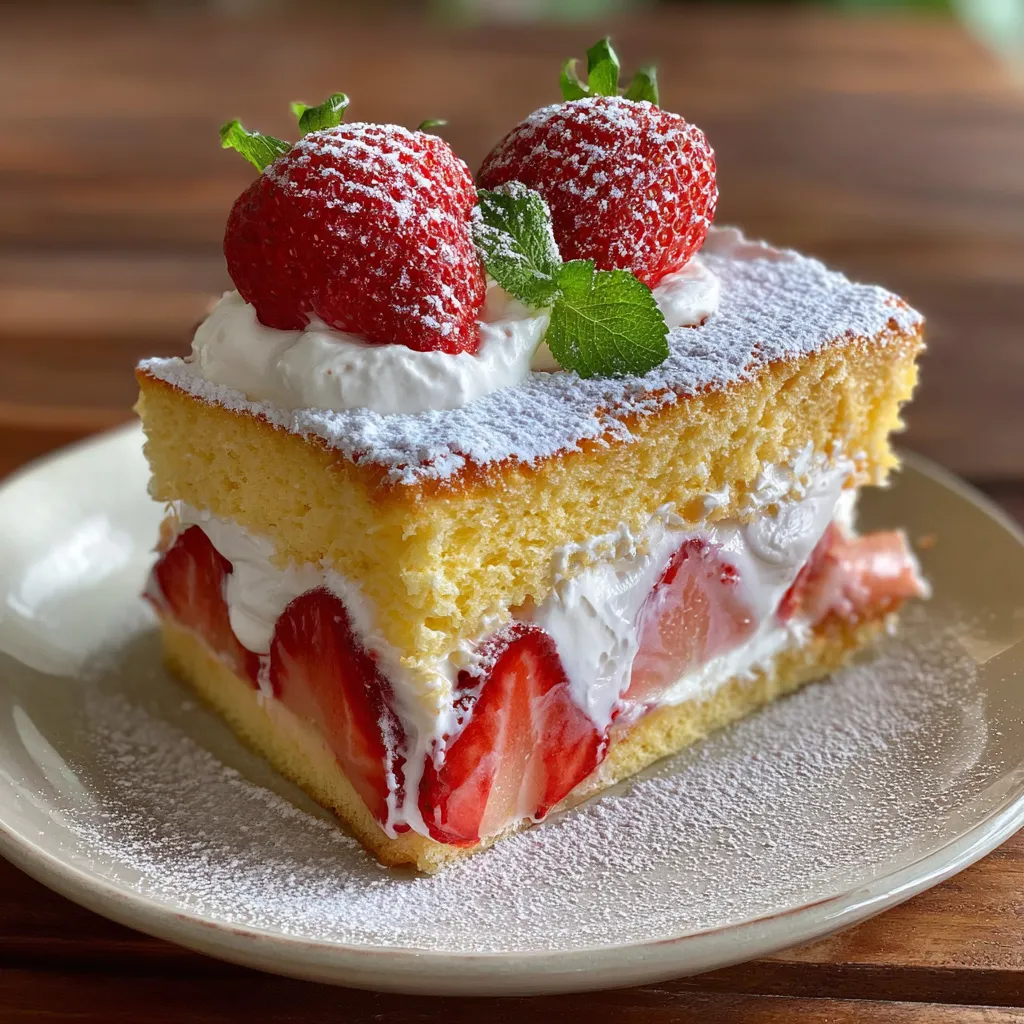

Japanese Strawberry Cake
Description
A feather-light sponge bakes to golden perfection, then surrenders to clouds of sweetened cream and jewels of fresh strawberries. Every forkful offers soft, airy crumb and bright, juicy fruit for a pure taste experience.
Ingredients
Instructions
-
Preheat the oven to 170°C and line an 18 cm round cake pan with parchment paper.
-
In a bowl sift together the cake flour and cornstarch and set aside.
-
Melt the butter over low heat, stir in the warm milk until combined, then set aside to cool slightly.
-
In a clean bowl whisk the egg whites until foamy, then gradually add the granulated sugar and beat until stiff peaks form.
-
In a separate bowl whisk the egg yolks with the vanilla extract until pale and slightly thickened.
-
Gently fold the sifted flours into the egg yolk mixture, then carefully fold in the melted butter mixture.
-
Fold one third of the meringue into the batter to lighten it, then fold in the remaining meringue in two batches until just combined.
-
Pour the batter into the prepared pan and bake for 25 to 30 minutes, or until the top is golden and a skewer comes out clean.
-
Allow the sponge to cool completely on a wire rack, then slice it horizontally into two even layers.
-
Whip the heavy cream with the powdered sugar to soft peaks, spread half the cream on the bottom layer, arrange sliced strawberries over the cream, top with the second sponge layer, cover the cake with the remaining cream and decorate with the whole strawberries.
-
Chill the cake in the refrigerator for at least 2 hours before slicing and serving.
Note
- Use room temperature eggs to achieve maximum volume in the sponge.
- Be careful not to overmix the batter to keep the cake light and fluffy.
- Ensure the sponge is completely cool before filling to prevent the cream from melting.
- Adjust the sugar in the whipped cream to suit the sweetness of your strawberries.

