

Ready to take a flavor trip across the Mediterranean with a single skillet? Mediterranean Orzo and Beans brings together tender orzo pasta, creamy cannellini beans, tangy tomato, and zesty lemon, all brightened by fresh parsley and finished with salty feta. This vibrant one-pan meal is perfect for busy weeknights and beginner cooks looking to add a taste of the Med to their dinner routine.
Key Ingredients
Grab these simple ingredients and you’ll have a vibrant Mediterranean skillet in no time!
- 1 cup orzo pasta: Provides a tender, rice-like base that soaks up the rich tomato and broth flavors.
- 2 tablespoons olive oil: Acts as the flavorful cooking fat to sauté the aromatics.
- 2 cloves garlic, minced: Infuses each bite with a fragrant garlic punch.
- 1 small onion, diced: Adds sweetness and depth when sautéed until translucent.
- 1 tablespoon tomato paste: Concentrates tomato flavor and lends a rich, umami-packed base.
- 1 can (14 ounces) diced tomatoes, drained: Brings tangy, juicy tomato chunks without excess liquid.
- 1 can (15 ounces) cannellini beans, rinsed and drained: Contributes creamy protein and fiber.
- 2 cups vegetable broth: Supplies savory cooking liquid that flavors the orzo.
- 1 teaspoon dried oregano: Offers earthy, herbaceous Mediterranean notes.
- 1/4 teaspoon red pepper flakes: Adds a subtle kick of heat.
- Salt to taste: Enhances and balances all the flavors.
- Black pepper to taste: Provides a sharp, aromatic finish.
- 2 tablespoons lemon juice: Brightens the dish with a citrusy zing.
- 2 tablespoons chopped fresh parsley: Delivers fresh, green brightness.
- 1/2 cup crumbled feta cheese: Crowns the skillet with salty, creamy richness.
How To Make Mediterranean Orzo and Beans
This simple one-pan recipe lets you build layers of flavor in just a few steps. From sautéing aromatics to simmering the orzo until it's perfectly al dente, you'll follow a straightforward process that leads to a hearty, colorful skillet dinner in under 30 minutes. Let’s dive into each step to make sure you nail that creamy, tomato-infused orzo and beans every time.
1. Heat olive oil in a large skillet over medium heat. Add the diced onion and cook, stirring occasionally, until it becomes translucent and tender, about 3 minutes.
2. Add the minced garlic and continue cooking for another 1 minute, stirring constantly to release its aromatic fragrance without burning.
3. Stir in the orzo pasta and tomato paste, tossing for about 2 minutes until the pasta is lightly toasted and evenly coated with the paste’s rich color and flavor.
4. Pour in the drained diced tomatoes, cannellini beans, vegetable broth, dried oregano, red pepper flakes, salt, and black pepper, stirring to combine all ingredients.
5. Bring the mixture to a rolling boil, then reduce heat to low and let it simmer, stirring occasionally to prevent sticking, until the orzo is al dente and most of the liquid is absorbed, about 10–12 minutes.
6. Remove the skillet from heat and stir in the lemon juice and chopped parsley, allowing the citrus brightness and fresh herbs to meld into the dish.
7. Serve the orzo warm, topped generously with crumbled feta cheese for a final burst of creamy, salty flavor.
Serving Suggestions
This Mediterranean Orzo and Beans dish shines on its own, but a few thoughtful accompaniments can take it to the next level. Whether you’re hosting friends for a casual dinner or enjoying a cozy solo meal, the bright flavors and creamy textures pair beautifully with simple sides and garnishes. Here are a few ideas to round out your plate and impress everyone at the table.
- Crusty bread: Tear or slice a warm baguette or sourdough to mop up every last bit of the flavorful broth.
- Simple green salad: Toss mixed greens with a light lemon vinaigrette to echo the dish’s bright citrus notes.
- Grilled vegetables: Char zucchini, bell peppers, or eggplant on the grill for smoky sweetness alongside the orzo.
- Chilled white wine: Pair with a crisp Sauvignon Blanc or dry rosé to complement the tangy feta and lemon.
Tips For Perfect Mediterranean Orzo and Beans
Ready to level up your Mediterranean Orzo and Beans? A few easy tweaks can ensure you nail the perfect texture, flavor balance, and presentation every time. Whether you’re adding extra protein or fine-tuning the salt level, these friendly pointers will help you adapt the recipe to your taste and ingredients on hand.
- For extra protein and a heartier meal, top the finished orzo with grilled chicken or sautéed shrimp, slicing or tossing just before serving.
- Use low sodium vegetable broth to keep overall saltiness in check, especially when using canned beans and tomatoes.
- Substitute chickpeas or kidney beans in place of cannellini for a different texture; both require the same cook time since they’re pre-cooked.
- Store leftovers in an airtight container in the refrigerator for up to 3 days, then gently reheat with a splash of broth to revive the creamy sauce.
How To Store It
When you’ve got a crowd-pleaser like Mediterranean Orzo and Beans in your fridge, you’ll want easy ways to keep it tasting fresh. Proper storage not only preserves the flavors but also makes reheating a breeze for quick lunches or dinners later in the week. Here are a few tips for chilling, freezing, and reheating so every bite stays delicious.
- Refrigerate in an airtight container: Let the dish cool to room temperature, then seal and chill for up to 3 days.
- Freeze portions: Divide cooled orzo into freezer-safe containers, leaving a little headspace; freeze for up to 2 months.
- Thaw overnight: Move a frozen portion to the refrigerator before use, then reheat gently.
- Reheat with extra liquid: Warm on the stovetop or in the microwave, adding a splash of water or broth to restore steam and creaminess.
Frequently Asked Questions
Here are quick answers to the most common queries about this Mediterranean Orzo and Beans skillet.
- Q: How long does it take to prepare and cook this Mediterranean Orzo and Beans recipe?
A: From start to finish, you can expect about 25 minutes. Prep time is roughly 5 minutes for chopping the onion and garlic, draining the tomatoes and beans, and measuring ingredients. Cooking time is about 18 minutes—3 minutes to sauté the onion, 1 minute for the garlic, 2 minutes to toast the orzo with tomato paste, and 10–12 minutes to simmer until the orzo is al dente and most of the liquid is absorbed.
- Q: Can I substitute the cannellini beans with a different bean, and will it affect the cooking time?
A: Yes, you can swap in chickpeas or kidney beans. Chickpeas will give a slightly firmer bite, while kidney beans have a denser texture and hold up well in saucy dishes. Because both alternatives are also canned and pre-cooked, your cooking time remains the same—just be sure to rinse and drain them thoroughly to avoid thinning the sauce.
- Q: How can I reduce the overall sodium content in this dish?
A: To keep sodium levels lower, use a low-sodium or no-salt-added vegetable broth, rinse the canned beans and drained tomatoes well to wash away excess salt, and hold back a pinch of the added salt until after tasting. You can also omit or reduce the feta topping or choose a reduced-sodium feta to further cut down on salt.
- Q: Can I make this recipe vegan or dairy-free without sacrificing flavor?
A: Absolutely. Simply omit the crumbled feta or substitute it with a plant-based vegan feta alternative. The lemon juice and fresh parsley still provide plenty of brightness, and the tomato paste, beans, and orzo deliver satisfying texture and flavor without dairy.
- Q: What’s the best way to add extra protein like chicken or shrimp?
A: For grilled chicken, season boneless breasts or thighs with salt, pepper, and a drizzle of olive oil before grilling over medium heat for 6–8 minutes per side, then slice and serve on top. For shrimp, toss peeled and deveined shrimp in olive oil, garlic, salt, and pepper, and sauté in a separate pan for 2–3 minutes per side until opaque. Fold them into the orzo just before serving to keep them tender.
- Q: How do I store and reheat leftovers, and how long will they last?
A: Let the dish cool slightly, then transfer to an airtight container and refrigerate for up to 3 days. When reheating, add a splash of water or broth to loosen the mixture and microwave or warm gently on the stovetop over low heat, stirring occasionally until heated through.
- Q: How can I adjust the spice level if I prefer a milder or hotter dish?
A: For a milder version, omit the red pepper flakes or reduce to a pinch. To up the heat, increase the red pepper flakes to ½ teaspoon or add a dash of cayenne pepper. You can also stir in a spoonful of harissa or chili paste at the end for a deeper, smoky spice.
What Makes This Special
There’s something deeply satisfying about scooping up tender orzo, creamy beans, and tangy tomato, all brightened by lemon and crowned with salty feta. This one-pan skillet is as easy as it is vibrant—perfect for beginners yet impressive enough for guests. Feel free to print this article and save it for whenever you crave a Mediterranean getaway on a busy weeknight. If you give it a try, drop a comment with your tweaks or questions—I can’t wait to hear how your skillet turned out!
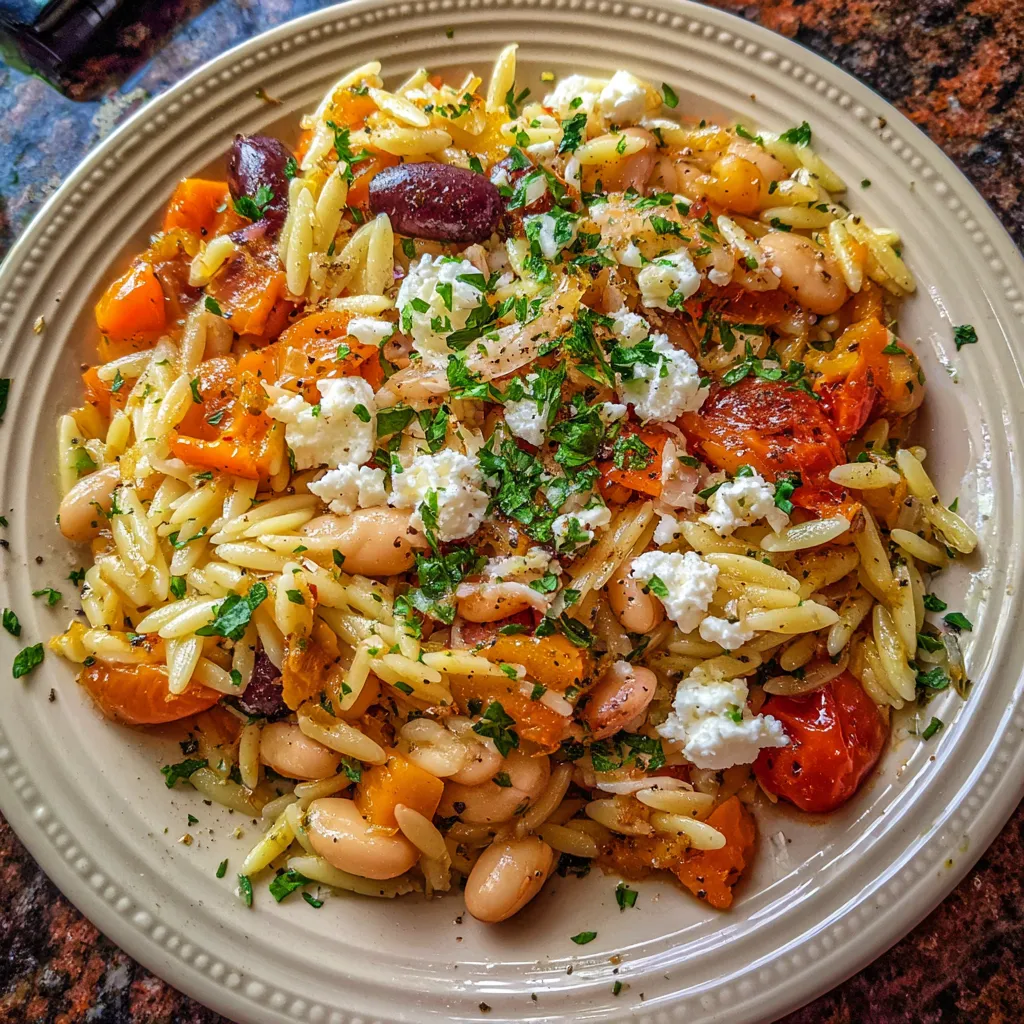

Mediterranean Orzo and Beans
Description
Fragrant garlic and onion meld with tangy tomato and creamy beans as orzo pasta simmers to al dente perfection. Bright parsley and lemon juice lift each bite, finished with salty feta for a satisfying Mediterranean skillet feast.
Ingredients
Instructions
-
Heat olive oil in a large skillet over medium heat and sauté onion until translucent, about 3 minutes.
-
Add minced garlic and cook for another 1 minute until fragrant.
-
Stir in orzo pasta and tomato paste, coating the pasta evenly for 2 minutes.
-
Pour in diced tomatoes, cannellini beans, vegetable broth, dried oregano, red pepper flakes, salt, and black pepper.
-
Bring mixture to a boil, then reduce heat to low and simmer, stirring occasionally, until the orzo is al dente and most liquid is absorbed, about 10–12 minutes.
-
Remove from heat and stir in lemon juice and chopped parsley.
-
Serve warm topped with crumbled feta cheese.
Note
- For extra protein, top with grilled chicken or shrimp.
- Use low sodium broth to control the overall saltiness.
- Substitute chickpeas or kidney beans if you prefer a different texture.
- Leftovers can be stored in an airtight container in the refrigerator for up to 3 days.

