

Salmon Pesto Pasta is a creamy, herby salmon pasta tossed in vibrant pesto for a quick weeknight dinner. Flaky salmon mingles with silky pesto cream sauce, enveloping al dente pasta in bright basil flavor and a hint of garlic. With just a handful of ingredients and under 30 minutes from start to finish, this dish feels satisfyingly gourmet yet remains super approachable—a perfect way to bring a restaurant-worthy meal to your table any night of the week!
Key Ingredients
Before you get cooking, let’s round up the essentials you’ll need to make this Salmon Pesto Pasta shine:
- 200 g pasta: A sturdy, al dente base that holds onto every drop of the creamy pesto sauce.
- 200 g salmon fillet: Flaky protein offering rich, tender bites that pair perfectly with basil and garlic.
- 100 g pesto sauce: Vibrant basil-driven sauce that infuses the dish with herby depth.
- 2 tbsp olive oil: Silky fat perfect for sautéing garlic and giving salmon a golden sear.
- 2 cloves garlic minced: Fragrant aromatics that deepen flavor in every mouthful.
- 50 ml heavy cream: Adds luscious richness, smoothing and uniting the pesto into a silky sauce.
- Salt to taste: Essential seasoning to enhance and balance flavors.
- Black pepper to taste: A final spicy touch for complexity and warmth.
How To Make Salmon Pesto Pasta
This Salmon Pesto Pasta comes together in one skillet (plus a pot for the pasta), making cleanup a breeze. You’ll start by cooking the pasta until perfectly firm, then sear tender salmon pieces, build the creamy pesto sauce right in the same pan, and finish by tossing everything together. In under half an hour, you’ll have a restaurant-quality meal that sings with basil, garlic, and ocean-fresh salmon.
1. Bring a pot of salted water to a boil and add the pasta, cooking until al dente according to package instructions.
2. While the pasta cooks, heat the olive oil in a large skillet over medium heat until shimmering.
3. Add the minced garlic and sauté until fragrant, about 1 minute, taking care not to let it brown.
4. Cut the salmon fillet into bite-sized pieces and add to the skillet, cooking each side for 3–4 minutes until the flesh turns just opaque.
5. Stir in the pesto sauce and heavy cream, reducing heat to low and whisking until the sauce is completely smooth.
6. Drain the pasta, reserving a splash of cooking water if you need to loosen the sauce, then add it to the skillet, gently tossing to coat each strand.
7. Season with salt and black pepper to taste, adjusting until the flavors are balanced and bright.
8. Serve immediately, garnished as desired for a beautiful presentation and optimal flavor.
Serving Suggestions
Once your Salmon Pesto Pasta is ready, here are a few ideas to elevate the meal and make it truly memorable:
- Lemon Wedges: A bright squeeze of lemon over the finished pasta adds a zesty pop that cuts through the creaminess. Serve on the side for guests to adjust.
- Crusty Bread: Golden, toasted baguette slices are perfect for mopping up every last bit of pesto cream sauce. Drizzle with olive oil and toast under the broiler.
- Fresh Salad: A crisp green salad dressed in a simple vinaigrette balances the rich pasta. Arugula or mixed greens work wonderfully and add a refreshing crunch.
- Grated Parmesan: Dusting freshly grated Parmesan cheese right before serving adds an extra savory layer and melty finish to each bite.
Tips For Perfect Salmon Pesto Pasta
Bringing out the best in this dish is easy with just a few friendly pointers. Whether you’re a pesto purist or love to experiment, these notes will help you customize the recipe while keeping everything on point:
- You can use store-bought or homemade pesto sauce.
- For a lighter version, omit the heavy cream.
- Leftover cooked salmon can be substituted.
- Garnish with grated Parmesan cheese or fresh basil leaves for extra flavor.
How To Store It
If you have leftovers (and we won’t judge if you do!), storing your Salmon Pesto Pasta properly will keep it tasting just as good the next day. Follow these simple guidelines to maintain freshness and flavor:
- Refrigerate in an Airtight Container: Let the pasta cool completely before sealing in a container. Store in the fridge for up to two days.
- Revive When Reheating: Warm gently in a skillet over low heat, adding a splash of water or cream to loosen the sauce and keep it silky.
- Freezing Option: You can freeze the pasta in a sealed freezer bag for up to one month. Thaw overnight in the fridge before gently reheating.
- Oven Reheat: Transfer to a baking dish, cover with foil, and warm in a 350°F oven for 10–15 minutes until heated through.
Frequently Asked Questions
Here are answers to some common questions that come up when making this crowd-pleasing recipe:
- Q: How long does it take to prepare this recipe?
A: It takes about 25–30 minutes in total. This includes 5–7 minutes to boil water and chop ingredients, 10–12 minutes to cook the pasta, and 8–10 minutes to sauté the garlic, cook the salmon, and finish the sauce.
- Q: Can I use a different type of pasta?
A: Yes. While traditional spaghetti or linguine work well, you can substitute penne, fusilli, or farfalle. Choose a shape that holds sauce effectively. Adjust cooking time according to the package instructions to achieve al dente.
- Q: What can I use as a substitute for heavy cream?
A: For a lighter sauce, substitute Greek yogurt thinned with a tablespoon of water or milk, or use half-and-half. Stir it in off the heat to prevent curdling, then return to low heat until the sauce is smooth.
- Q: Can I use frozen or leftover salmon?
A: Yes. If using frozen salmon, fully thaw it in the refrigerator overnight and pat dry before cooking. If using leftover cooked salmon, add it in step 6 when you toss the pasta with the sauce; heat gently to avoid overcooking.
- Q: How do I prevent the salmon from becoming dry or overcooked?
A: Cut the fillet into evenly sized pieces and cook over medium heat. Sear each side for 3–4 minutes, just until the flesh turns opaque. Remove from heat promptly and allow residual heat to finish cooking.
- Q: How should I store and reheat leftovers?
A: Store leftovers in an airtight container in the refrigerator for up to two days. To reheat, warm gently in a skillet over low heat, adding a splash of heavy cream or water to revive the sauce, stirring until evenly heated.
- Q: What garnishes or additions can enhance the flavor?
A: Garnish with grated Parmesan cheese, fresh basil leaves, or a squeeze of lemon juice for brightness. You can also sprinkle toasted pine nuts or red pepper flakes for added texture and spice.
What Makes This Special
This Salmon Pesto Pasta strikes the perfect balance between effortless weeknight cooking and restaurant-worthy flavor. The creamy pesto cream sauce clings to each strand of pasta while tender salmon pieces bring a satisfying richness. Plus, it’s versatile enough to adapt—skip the cream for a lighter meal, swap in leftover fish, or load up on garnishes for extra pizzazz. Feel free to print this article and save it for those busy evenings when you want something quick, comforting, and a little bit fancy. Got questions or comments? I’d love to hear how your version turns out!
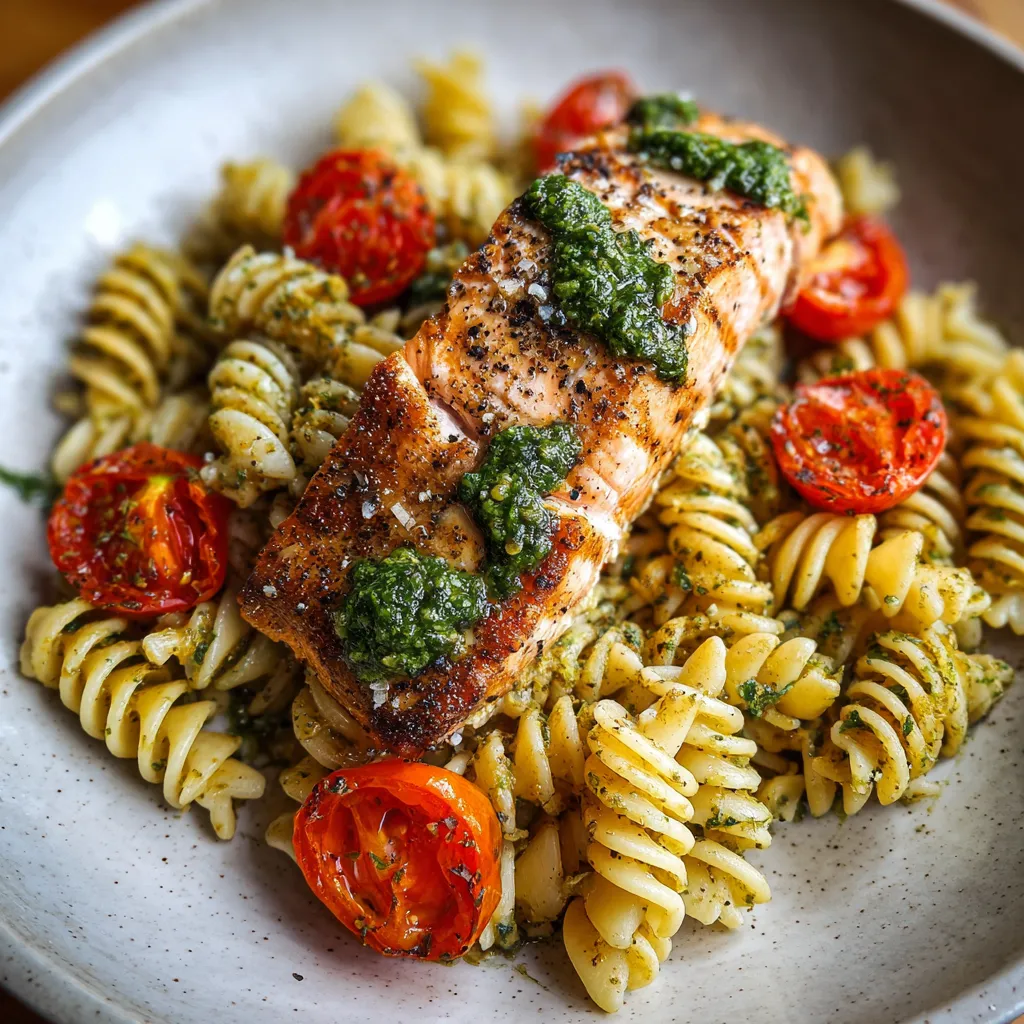

Salmon Pesto Pasta
Description
Flaky salmon mingles with silky pesto cream sauce, enveloping al dente pasta in bright basil flavor and a hint of garlic. Ready in minutes for a satisfying, restaurant-worthy meal at home.
Ingredients
Instructions
-
Bring a pot of salted water to a boil and add pasta, cooking until al dente according to package instructions.
-
While pasta cooks, heat olive oil in a large skillet over medium heat.
-
Add garlic minced and sauté until fragrant, about 1 minute.
-
Cut salmon fillet into bite-sized pieces and add to the skillet, cooking until just opaque, about 3–4 minutes per side.
-
Stir in pesto sauce and heavy cream, heating through until the sauce is smooth.
-
Drain pasta and add it to the skillet, tossing gently to coat with the sauce.
-
Season with salt and black pepper to taste.
-
Serve immediately, garnished as desired.
Note
- You can use store-bought or homemade pesto sauce.
- For a lighter version, omit the heavy cream.
- Leftover cooked salmon can be substituted.
- Garnish with grated Parmesan cheese or fresh basil leaves for extra flavor.

