

Slow Cooker Korean Beef Noodles are a hands-off weeknight dream come true, weaving rich Korean flavors into every forkful. Tender cubes of beef slowly braise in a spicy-sweet gochujang sauce, while garlic, ginger, and sesame oil build layers of savory depth. When silky udon noodles join the party, they soak up all that delicious broth for a cozy, comforting bowl. Whether you’re craving something hearty after a long day or simply want to impress with minimal effort, this recipe delivers big on flavor and warmth with almost no fuss.
Key Ingredients
Gathering these staples sets you up for success:
- 1 pound beef chuck roast: Well-marbled for melt-in-your-mouth tenderness.
- 1/2 cup soy sauce: Brings salty depth and rich umami.
- 1/4 cup gochujang: Spicy-sweet Korean chili paste for authentic heat.
- 2 tablespoons brown sugar: Balances the spice with caramel sweetness.
- 2 tablespoons rice vinegar: Adds bright, tangy lift to the sauce.
- 1 tablespoon sesame oil: Infuses a toasty, nutty aroma.
- 4 cloves garlic: Provides pungent, aromatic flavor.
- 1 tablespoon fresh ginger: Offers zesty warmth and freshness.
- 1 onion: Delivers savory sweetness as it softens.
- 1 carrot: Adds subtle sweetness and a pop of color.
- 8 ounces mushrooms: Absorb savory juices for meaty texture.
- 2 cups beef broth: Creates a rich, simmering base.
- 8 ounces dried udon noodles: Chewy strands that soak up the sauce.
- 2 stalks green onions: Bright, crisp garnish finish.
- 1 tablespoon sesame seeds: Crunchy, nutty topping for extra flair.
How To Make Slow Cooker Korean Beef Noodles
This recipe is all about simple steps and a slow cooker doing the heavy lifting. You’ll start by prepping meat and aromatics, then layering everything into your cooker for hours of unattended simmering. Finally, you’ll finish by tossing in udon noodles so they absorb every bit of that flavorful sauce. With minimal active time, you’ll end up with tender beef and perfectly sauced noodles ready to enjoy.
1. Trim excess fat from the beef and cut into bite-sized pieces. Mince the garlic and ginger while slicing the onion, julienning the carrot, and slicing the mushrooms.
2. Place the beef pieces in the slow cooker, creating a base layer for all the flavor.
3. In a bowl, whisk together the soy sauce, gochujang, brown sugar, rice vinegar, sesame oil, minced garlic, and minced ginger. Pour the mixture evenly over the beef.
4. Add the sliced onion, carrot, mushrooms, and beef broth to the slow cooker. Cover, then cook on low for 6–8 hours or on high for 3–4 hours until the beef is tender.
5. About 30 minutes before the end of cooking, cook the udon noodles according to package instructions, then drain and rinse under cold water to stop further cooking.
6. Stir the cooked noodles into the slow cooker so they can absorb the sauce for the remaining time, coating each strand in savory goodness.
7. Serve the noodles and beef in bowls and garnish with sliced green onions and sesame seeds for a bright, crunchy finish.
Serving Suggestions
These bowls are satisfying on their own, but a few extras take them over the top. Here are some ideas to turn dinner into an experience:
- Pair with steamed bok choy or baby spinach drizzled with sesame oil for added greens and texture.
- Offer a side of kimchi to introduce a tangy, spicy contrast that complements the gochujang.
- Drizzle a bit of chili oil on top for extra heat and a glossy finish.
- Serve with pickled cucumbers tossed in rice vinegar and garlic for a refreshing crunch alongside the rich noodles.
Tips For Perfect Slow Cooker Korean Beef Noodles
With a few insider tweaks, you’ll have a foolproof feast every time. These tips help you balance flavors and make the most of leftovers:
- You can adjust spice level by adding more or less gochujang, tailoring the heat to your taste buds.
- Leftovers keep well in an airtight container in the fridge for up to 3 days—just reheat gently.
- Substitute udon noodles with rice noodles or soba if you want a different texture or gluten-free option.
- Garnish with additional sesame seeds and green onions before serving to refresh flavors and add crunch.
How To Store It
This Slow Cooker Korean Beef Noodles dish stores beautifully, so you can enjoy it all week without sacrificing taste or texture. Follow these methods to keep everything fresh and delicious:
- Refrigerate: Let the meal cool, then transfer to an airtight container. Store in the fridge for up to 3 days and reheat gently on the stove or in the microwave.
- Freeze: Separate the beef sauce and noodles into freezer-safe containers. Freeze for up to 2 months, thaw overnight in the fridge, and reheat on the stovetop for best texture.
- Keep noodles separate: If you plan to freeze, store noodles apart so they don’t become overly soft when thawed.
- Reheat gently: Warm leftovers over low heat, adding a splash of beef broth or water to loosen the sauce as needed.
Frequently Asked Questions
Here are quick answers to common questions about this recipe:
- Q: How long does it take to prepare and cook this recipe?
A: It takes about 15 minutes to prep and then 6 to 8 hours on low (or 3 to 4 hours on high) in the slow cooker, plus about 10 minutes to cook and rinse the udon noodles before stirring them in for the final 30 minutes.
- Q: How can I adjust the spice level to make it milder or hotter?
A: To dial down the heat, reduce the gochujang by up to half or add a teaspoon of sugar to balance the flavor. To make it spicier, increase the gochujang, add a pinch of red pepper flakes, or stir in a teaspoon of chili oil when serving.
- Q: What can I use if I don’t have udon noodles on hand?
A: You can substitute udon with rice noodles, soba noodles, or even spaghetti in a pinch. Follow the package instructions for each type and add them to the slow cooker about 30 minutes before serving to let them absorb the sauce.
- Q: How do I prevent the noodles from becoming too soft or mushy?
A: Rinse the cooked noodles under cold water immediately after boiling to stop the cooking process and remove excess starch. Add them to the slow cooker only during the last 30 minutes of cooking so they soak up sauce without overcooking.
- Q: Can I use a different cut of meat or another protein?
A: Beef chuck roast is ideal for slow cooking because of its marbling, but you can use brisket, short ribs, or even stew meat. If using chicken thighs or pork shoulder, reduce the cooking time slightly and check for doneness about an hour earlier.
- Q: How should I store leftovers, and can I freeze them?
A: Let the leftovers cool completely, then transfer to an airtight container. Refrigerate for up to 3 days. For freezing, store the beef and sauce separately from the noodles in freezer‐safe containers for up to 2 months. Thaw overnight in the fridge and reheat gently on the stove.
- Q: My sauce is thinner than I expected. How can I thicken it?
A: Mix 1 tablespoon of cornstarch with 2 tablespoons of cold water to make a slurry, then stir it into the slow cooker during the last 20 minutes of cooking. Alternatively, remove the lid for the final 10–15 minutes to let some liquid evaporate.
What Makes This Special
What really sets Slow Cooker Korean Beef Noodles apart is the way simple pantry ingredients—soy sauce, gochujang, garlic, and ginger—transform into a deeply satisfying sauce as the beef simmers to perfection. The udon noodles absorb every flavor-packed drop, giving you a one-bowl wonder that feels both comforting and exotic. It’s beginner-friendly, hands-off, and perfect for printing and saving to your recipe box. Give it a whirl, and don’t be shy—leave a comment below if you have questions or want to share your flavorful twists!
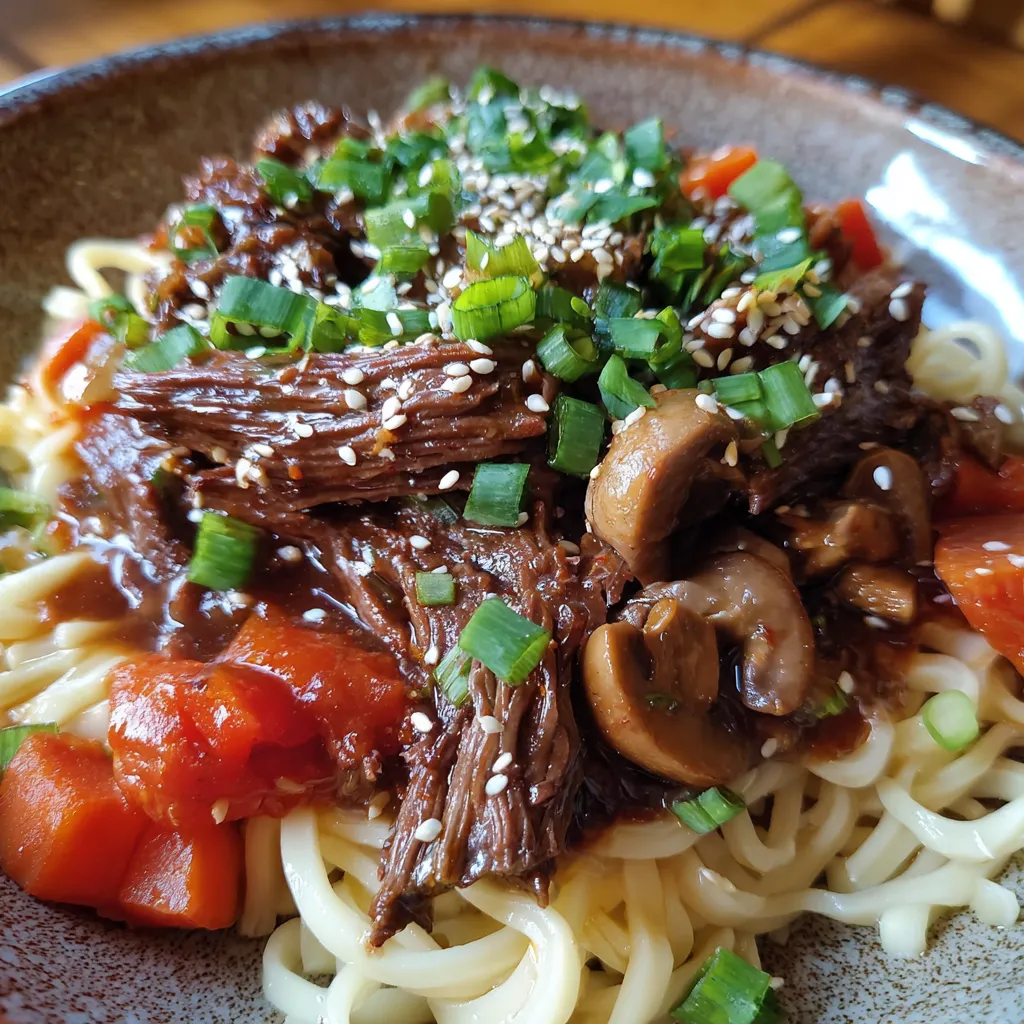

Slow Cooker Korean Beef Noodles
Description
Rich, tender beef cubes bathe in a savory-spicy broth, while silky udon soak up every drop. Fragrant garlic, ginger, and sesame lift each mouthful into a cozy, flavor-packed bowl perfect for easy weeknight dinners.
Ingredients
Instructions
-
Trim excess fat from the beef and cut into bite sized pieces then mince the garlic and ginger while slicing the onion, julienning the carrot, and slicing the mushrooms.
-
Place the beef pieces in the slow cooker.
-
In a bowl whisk together the soy sauce, gochujang, brown sugar, rice vinegar, sesame oil, minced garlic, and minced ginger then pour the mixture over the beef.
-
Add the sliced onion, carrot, mushrooms, and beef broth to the slow cooker, cover, and cook on low for 6–8 hours or on high for 3–4 hours.
-
About 30 minutes before the cooking time is up, cook the udon noodles according to package instructions, then drain and rinse under cold water.
-
Stir the cooked noodles into the slow cooker and allow them to absorb the sauce for the remaining cooking time.
-
Serve the noodles and beef in bowls and garnish with sliced green onions and sesame seeds.
Note
- You can adjust spice level by adding more or less gochujang
- Leftovers keep well in an airtight container in the fridge for up to 3 days
- Substitute udon noodles with rice noodles or soba as desired
- Garnish with additional sesame seeds and green onions before serving

