

Ready to spice up your breakfast routine? Spicy Gochujang Eggs bring creamy yolks together with crispy golden edges, all drenched in a sweet-spicy glaze that’ll kickstart your day with bold Korean flair. This easy beginner-friendly recipe delivers big flavor with minimal fuss, perfect for breakfasts, snacks, or a fun side with rice. Ready to give your eggs a serious upgrade? Stick around—your taste buds are in for a treat!
Key Ingredients
Before we get cooking, let’s round up everything you need to whip up these Spicy Gochujang Eggs. From creamy eggs to that punchy gochujang glaze, each component plays its part in creating crisp edges, luscious yolks, and a balanced sweet-spicy finish.
- 4 large eggs: The star of the show, providing creamy yolks and sturdy whites for frying and soaking up that gochujang glaze.
- 2 tablespoons gochujang (Korean chili paste): Delivers bold sweet-spicy flavor and vibrant color to the sauce.
- 1 tablespoon soy sauce: Adds savory depth and umami to balance the chili paste.
- 1 teaspoon sesame oil: Brings a nutty aroma and richness to the sauce mix.
- 1 teaspoon honey or sugar: Sweetens the sauce to tame the heat and create a glossy glaze.
- 1 garlic clove, minced: Offers a sharp, aromatic kick that brightens the sauce.
- 1 green onion, finely sliced: Adds a fresh, crisp bite and color for garnish.
- 1 tablespoon vegetable oil (for frying eggs): Ensures crispy, golden edges on the fried eggs.
- Sesame seeds (for garnish): Sprinkles on top for extra crunch and visual appeal.
- Fresh cilantro or parsley (for garnish, optional): Provides a fresh herbal note that brightens each bite.
How To Make Spicy Gochujang Eggs
Let’s dive into the simple steps to transform those humble eggs into crispy-edged beauties bathed in a luscious gochujang glaze. Follow along as we mix the sauce, cook and chill the eggs, fry them to golden perfection, and finish with that irresistible saucy drizzle and garnish.
1. Begin by preparing the sauce: In a small bowl, combine gochujang, soy sauce, sesame oil, honey (or sugar), and minced garlic. Whisk until the mixture is smooth and fully blended.
2. Fill a small pot with water and bring it to a boil. Carefully lower the eggs into the pot using a slotted spoon, then reduce the heat to maintain a gentle simmer.
3. Let the eggs simmer for 6–7 minutes for a slightly soft center, or 8–9 minutes if you prefer firmer yolks.
4. While the eggs are cooking, prepare an ice bath by filling a bowl with cold water and ice cubes. Immediately transfer the eggs into the ice bath for about 5 minutes to stop the cooking and make peeling easier.
5. Carefully peel the eggs under cool running water and set them aside.
6. Heat the vegetable oil in a non-stick skillet over medium heat. When the oil shimmers, add the peeled eggs and fry for 1–2 minutes per side, rolling them gently for even browning, until golden and crispy.
7. Remove the eggs from the skillet and place them on a plate. Drizzle the prepared gochujang sauce generously over the eggs.
8. Garnish with sliced green onions, sesame seeds, and fresh cilantro or parsley if desired. Serve immediately and enjoy!
Serving Suggestions
These saucy, crispy eggs are so versatile—whether you’re fueling a busy morning, craving a protein-packed snack, or building an epic rice bowl, Spicy Gochujang Eggs fit right in. Here are a few tasty ways to serve them and take your meal to the next level.
- Steamy Rice Bowls: Place sliced Spicy Gochujang Eggs on top of fluffy steamed rice, then add sautéed vegetables and a drizzle of extra sauce for a hearty meal.
- Bibimbap Twist: Assemble a quick bibimbap by layering wilted spinach, shredded carrots, bean sprouts, and kimchi under your eggs, then mix everything together for a flavor bomb.
- Savory Snack Bites: Halve the eggs and serve on cucumber rounds or toast points for an eye-catching appetizer or mid-afternoon pick-me-up.
- Green Salad Upgrade: Toss mixed greens with a light vinaigrette, then top with sliced gochujang eggs, cherry tomatoes, and extra cilantro for a protein-rich salad.
Tips For Perfect Spicy Gochujang Eggs
Nailing these Spicy Gochujang Eggs is all about balance—crispy edges, creamy centers, and just the right level of heat. Be sure to adjust your chili paste to match your spice tolerance, and don’t skip the ice bath for easier peeling and perfect yolk texture. Fry gently to avoid any cracks and maintain that coveted crunch. Feeling adventurous? Swap in fresh ginger or a squeeze of lime for a zesty twist in the sauce, or sprinkle a few extra sesame seeds for visual flair and texture.
- Gochujang can vary in spice level, so adjust the amount to suit your preference.
- This dish can be served as a snack, breakfast, or as a side with rice.
- Experiment by adding other ingredients to the sauce, like lime juice or ginger for a different flavor profile.
- Leftover gochujang sauce can be stored in the fridge for a week and used in other dishes.
How To Store It
Whether you’re meal-prepping or saving leftovers, proper storage keeps your Spicy Gochujang Eggs tasting just as vibrant. Separate the eggs from the sauce to preserve crispness, and keep garnishes fresh until serving. Follow these methods to maintain flavor and texture throughout the week.
- Refrigerate Eggs Separately: Store fried eggs in an airtight container, layered between parchment paper, in the refrigerator for up to 2 days.
- Keep Sauce Chilled: Pour any leftover gochujang sauce into a sealed jar or container and refrigerate for up to one week, giving it a quick stir before use.
- Store Garnishes Fresh: Place sliced green onions and cilantro in a small airtight container with a damp paper towel to keep them crisp for 2–3 days.
- Assemble Before Serving: For the best texture, combine eggs, sauce, and garnishes just before eating to maintain those irresistible crispy edges.
Frequently Asked Questions
Got questions? Here are some quick answers to help you nail these Spicy Gochujang Eggs.
- How long does it take to prepare and cook Spicy Gochujang Eggs?
It takes about 20–25 minutes total: roughly 5 minutes to mix the sauce, 7–9 minutes to simmer the eggs, 5 minutes to chill them in an ice bath, and 1–2 minutes to fry each egg until golden.
- How can I control the yolk consistency?
For a slightly soft center, simmer the eggs for 6–7 minutes over a gentle boil. If you prefer a firmer yolk, extend simmer time to 8–9 minutes. Immediately transfer eggs to an ice bath to stop cooking and make peeling easier.
- Can I make the gochujang sauce ahead of time and how should I store it?
Yes. Combine gochujang, soy sauce, sesame oil, honey (or sugar), and garlic, then transfer to an airtight container. Store in the refrigerator for up to one week. Stir well before drizzling over the eggs.
- What substitutions can I use if I don’t have gochujang or honey?
Use sriracha blended with a teaspoon of miso paste or chili garlic sauce in place of gochujang. Swap honey for maple syrup or an equal amount of brown sugar to maintain sweetness and consistency.
- How do I achieve extra-crispy, golden-brown eggs?
Heat enough vegetable oil in a non-stick skillet over medium heat until it shimmers. Gently roll peeled eggs in the oil so all sides make contact, frying each side 1–2 minutes until crispy without breaking the yolk.
- How can I adjust the spice level to suit different preferences?
Reduce the gochujang to one tablespoon and add an extra teaspoon of honey or sugar to tame the heat. To increase spiciness, add more gochujang or a pinch of Korean chili flakes (gochugaru).
- What are the best serving suggestions and pairings for this dish?
Serve the eggs over steamed rice, in bibimbap bowls, or alongside fresh salad greens. Top with sliced green onions, sesame seeds, and cilantro or parsley. Pair with kimchi, pickled radish, or steamed vegetables for a balanced meal.
What Makes This Special
These Spicy Gochujang Eggs hit all the right notes: creamy yolks wrapped in golden, crispy edges, drenched in a sticky-sweet chili glaze that somehow manages to be both bold and comforting. It’s a shockingly simple way to level up everyday eggs and inject some Korean-inspired flair into your plate. Go ahead and print this recipe for your kitchen wall—future you will thank you. If you give it a whirl, drop a comment with your tweaks, questions, or triumphant egg photos. Happy cooking!
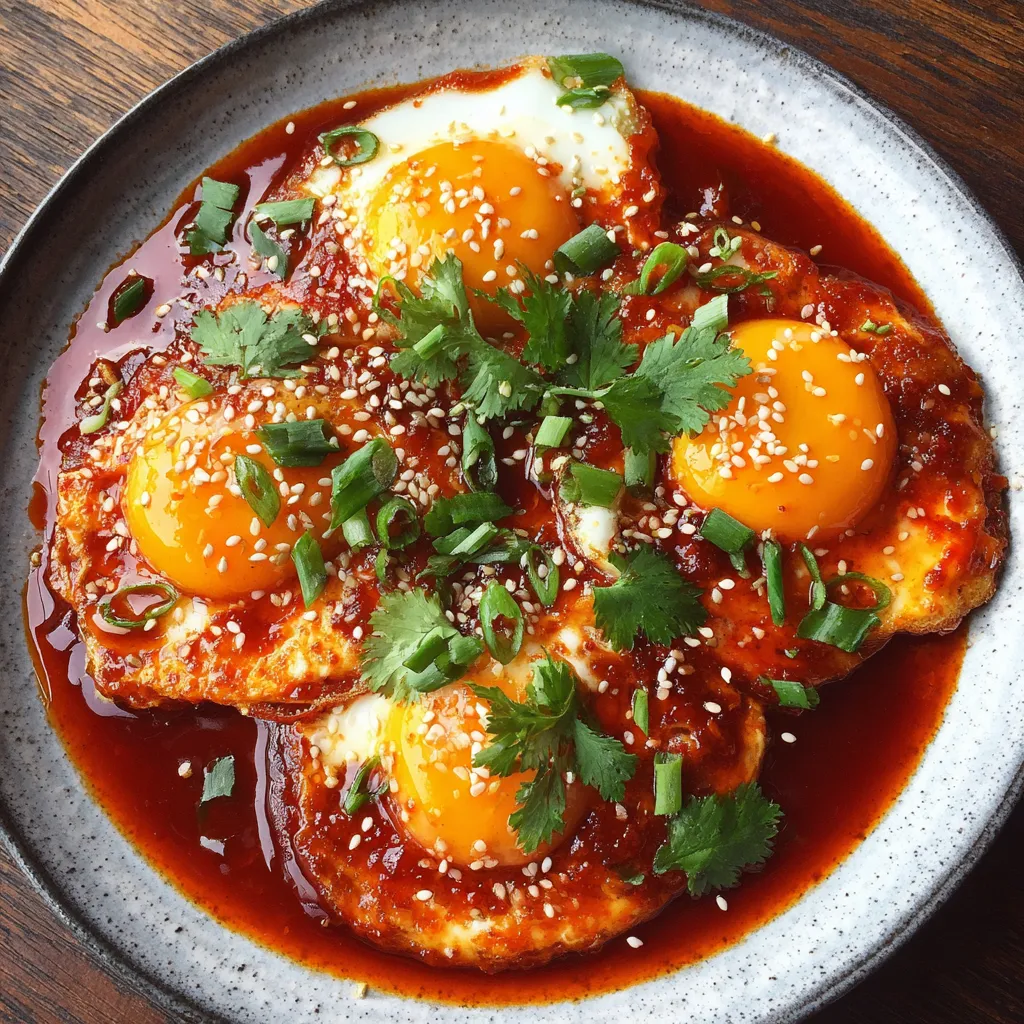

Spicy Gochujang Eggs
Description
Creamy yolks meet crispy golden edges in this bold gochujang egg dish, drizzled with sweet-spicy sauce and topped with sesame seeds and fresh green onions.
Ingredients
Instructions
-
Begin by preparing the sauce. In a small bowl, combine the gochujang, soy sauce, sesame oil, honey (or sugar), and minced garlic. Mix well until all ingredients are fully blended.
-
Fill a small pot with water and bring it to a boil. Carefully add the eggs, reducing the heat to a simmer. Let the eggs simmer for about 6-7 minutes for a slightly soft center. If you prefer firmer yolks, simmer for 8-9 minutes.
-
While the eggs are cooking, prepare an ice bath. Fill a bowl with cold water and ice cubes. Once the eggs are done cooking, transfer them immediately to the ice bath to stop the cooking process. Leave them in the ice bath for about 5 minutes.
-
Carefully peel the eggs and set them aside.
-
Heat the vegetable oil in a non-stick skillet over medium heat. Once the oil is hot, add the peeled eggs to the skillet and fry them for about 1-2 minutes until they are golden brown and crispy on the outside. Turn the eggs gently to get an even color.
-
Once cooked, remove the eggs from the skillet and place them on a plate.
-
Drizzle the gochujang sauce generously over the fried eggs.
-
Garnish with sliced green onions, sesame seeds, and fresh cilantro or parsley if desired. Serve immediately.
Note
- Gochujang can vary in spice level, so adjust the amount to suit your preference.
- This dish can be served as a snack, breakfast, or as a side with rice.
- Experiment by adding other ingredients to the sauce, like lime juice or ginger for a different flavor profile.
- Leftover gochujang sauce can be stored in the fridge for a week and used in other dishes.

