

Spicy Korean Ramen with Grilled Beef & Creamy Sauce is a flavor-packed bowl that brings together tender marinated steak, chewy noodles, bold gochujang-spiced broth, crisp vegetables, and a silky chili-mayo swirl. This recipe is perfect for an adventurous weeknight dinner or gathering with friends—throw on your apron, crank up the heat, and dive into every savory, spicy, and creamy spoonful. Let’s get cooking!
Key Ingredients
To craft this unforgettable ramen, you’ll need a blend of proteins, noodles, broth components, creamy sauce elements, and vibrant toppings.
- 350 g ribeye or sirloin steak, about 1.5–2 cm thick: Rich, marbled beef that soaks up the savory-spicy marinade for a juicy, charred bite.
- 1 tbsp soy sauce: Adds salty depth to the beef marinade and balances the broth.
- 1 tbsp Korean soy sauce for soup (optional, regular is fine): Provides umami boost to both marinade and broth base.
- 1 tbsp mirin or rice wine: Brings a touch of sweetness and acidity to the beef marinade.
- 1 tbsp sesame oil: Imparts nutty aroma in the marinade and final broth finish.
- 1 tsp gochujang (Korean chili paste): Delivers signature chili-sweet heat in both beef and broth.
- 1 tsp gochugaru (Korean chili flakes), adjust to taste: Layers in dry, smoky heat to marinade and broth.
- 2 tsp brown sugar or honey: Balances spicy notes with a caramelized sweetness.
- 2 cloves garlic, finely minced: Infuses the beef with pungent garlic flavor.
- 1 tsp ginger, finely grated: Adds warmth and bright zing to the beef marinade.
- 1 tbsp neutral oil (for grilling, if using pan): Prevents sticking and ensures a crisp sear.
- Salt and black pepper, to taste: Enhances all flavors across the beef and broth components.
- 2 packs fresh or instant ramen noodles (about 180–200 g total, not the seasoning packets): The chewy foundation that soaks up the spicy broth.
- 4 cups (1 liter) low-sodium chicken or beef broth: Creates a light but flavorful soup base.
- 1 cup water: Dilutes and balances the broth intensity.
- 1 tbsp neutral oil: Used to sauté aromatics in the broth.
- 3 cloves garlic, thinly sliced: Builds savory depth when lightly sautéed.
- 1 tbsp ginger, thinly sliced or julienned: Adds sharp, fresh notes to the broth.
- 2 tbsp gochujang: The heart of the broth’s spicy, savory character.
- 1 tbsp gochugaru (more or less to taste): Controls heat level and color in the soup.
- 1–2 tbsp soy sauce, to taste: Fine-tunes saltiness and umami in the broth.
- 1 tbsp fish sauce (optional, for depth): Elevates savory complexity.
- 1 tsp sugar: Rounds out acidity and heat with subtle sweetness.
- 1 tbsp rice vinegar or apple cider vinegar: Adds bright acidity to balance flavors.
- 1 tsp toasted sesame oil: Stirred in at the end for toasty aroma.
- Salt, to taste: Final seasoning for the broth.
- 1/3 cup mayonnaise (Japanese Kewpie preferred): Base for the creamy sauce swirl.
- 1/4 cup sour cream or plain Greek yogurt: Brings tangy coolness to the drizzle.
- 2 tbsp heavy cream or milk (to loosen to drizzling consistency): Adjusts sauce texture for the perfect swirl.
- 1 tbsp gochujang: Infuses the creamy sauce with chili-sweet depth.
- 1–2 tsp sriracha or other hot sauce (optional, for extra heat): Amp up the sauce’s fiery kick.
- 1 tsp lime juice or rice vinegar: Brightens the creamy sauce with acidity.
- 1/2 tsp sugar or honey: Balances heat and tang in the sauce.
- Pinch of salt: Ensures the creamy swirl isn’t flat.
- 2 soft-boiled eggs (6–7 minutes), halved: Silky richness that pairs beautifully with spicy broth.
- 1 cup mung bean sprouts (optional, blanched): Adds crisp, refreshing crunch.
- 1 cup napa cabbage or bok choy, roughly chopped: Leafy greens that blanch quickly for texture.
- 1/2 cup shiitake or cremini mushrooms, sliced: Earthy, savory bite in each spoonful.
- 2–3 green onions, finely sliced: Fresh oniony brightness.
- 1 small carrot, julienned: Sweet crunch and color contrast.
- 1 small sheet roasted seaweed (gim/nori), cut into strips: Umami-packed garnish.
- 1–2 tbsp toasted sesame seeds: Nutty finish and visual appeal.
- Fresh red chili slices or jalapeño, to taste: Extra heat on demand.
- Fresh coriander or perilla leaves (optional): Herbal lift.
- Lime wedges (optional, for serving): Citrus zing for personalization.
How To Make Spicy Korean Ramen with Grilled Beef & Creamy Sauce
Let’s walk through crafting this show-stopping ramen bowl from start to finish. You’ll first marinate and grill the beef for smoky flavor, whisk up a tangy-spicy creamy swirl, simmer a rich gochujang broth, quickly blanch veggies, and finally assemble each component into steaming bowls brimming with color, texture, and heat. Ready? Let’s dive in!
1. Marinate the beef
Pat the steak dry with paper towels, then place it in a shallow dish or resealable bag. In a bowl, whisk together soy sauces, mirin, sesame oil, gochujang, gochugaru, brown sugar, minced garlic, grated ginger, and black pepper until smooth. Pour the mixture over the steak, ensuring an even coating, then cover and chill for at least 30 minutes (ideally 1–2 hours), flipping halfway.
2. Prepare the creamy spicy sauce
In a small bowl, combine mayonnaise, sour cream (or yogurt), heavy cream (or milk), gochujang, sriracha (if using), lime juice (or rice vinegar), sugar, and a pinch of salt. Whisk until silky and drizzleable, adjusting thickness or heat as needed. Cover and chill so flavors meld.
3. Prepare vegetables and toppings
Bring a small pot of water to boil, then add eggs and cook for 6–7 minutes. Transfer to ice water, peel, and halve. Chop napa cabbage (or bok choy), slice mushrooms, green onions, and chili, julienne the carrot, and blanch bean sprouts for 30 seconds if using. Cut seaweed into thin strips and set all garnishes aside.
4. Make the spicy ramen broth
Heat 1 tbsp neutral oil in a pot over medium heat. Sauté sliced garlic and ginger for 30–60 seconds until fragrant. Stir in gochujang and gochugaru, cooking for 30 seconds more until paste darkens. Pour in broth and water, stir to dissolve the paste, then add soy sauce, fish sauce (if using), sugar, and vinegar. Bring to a gentle boil, reduce to simmer for 8–10 minutes, tasting and adjusting as you go. Finish with toasted sesame oil.
5. Grill or sear the marinated beef
Remove steak from fridge 15 minutes before cooking. For an outdoor grill, preheat to medium-high and lightly oil grates; grill steak 3–4 minutes per side for medium-rare. For stovetop, heat a grill pan or cast iron skillet until very hot, add neutral oil, and sear 3–4 minutes per side without moving. Let rest 5–10 minutes, then slice thinly against the grain.
6. Cook the ramen noodles and vegetables
Boil water in a separate pot, add noodles, and cook until just al dente (2–3 minutes fresh, slightly longer dried). In the last minute, drop in napa cabbage (or bok choy) and mushrooms to blanch. Drain noodles and veggies together and divide between two large bowls.
7. Assemble the ramen bowls
Ladle hot broth over noodles and veggies. Arrange grilled beef slices in a fan or mound, add a halved soft-boiled egg, then top with bean sprouts, carrot, green onion, chili slices, seaweed strips, and sesame seeds. Drizzle the creamy spicy sauce in a decorative swirl.
8. Serve
Present the ramen immediately while piping hot, offering extra creamy sauce, lime wedges, and chili flakes on the side. Encourage diners to stir in the sauce for a luxuriously smooth, tangy finish.
Serving Suggestions
Once your bowls are assembled, elevate the experience with thoughtful accompaniments and plating touches. Whether for cozy nights or casual dinner parties, these ideas will make your ramen shine in every spoonful.
- Citrus Lift: Serve with lime wedges on the side so each guest can squeeze fresh juice over the broth for bright acidity.
- Extra Heat Station: Provide small bowls of additional gochugaru, sriracha, or fresh chili slices so everyone can customize the spice level.
- Herbal Garnish: Offer a platter of fresh coriander or perilla leaves—bright herbs that add an aromatic pop and cool contrast.
- Crispy Bite: Include a side of garlic chips or toasted shallots sprinkled on top for a crunchy texture contrast against the silky noodles and broth.
Tips For Perfect Spicy Korean Ramen with Grilled Beef & Creamy Sauce
Mastering this recipe means balancing bold flavors with temperature, texture, and timing. Here are a few insider tips to ensure your bowl turns out as spectacular as you imagined.
- For a lighter version, use Greek yogurt instead of mayonnaise for part of the creamy sauce and use leaner cuts of beef like flank steak.
- For extra umami, add a small piece of dried kelp (kombu) or a few dried anchovies to the broth while simmering, then remove before serving.
- To make it vegetarian, swap the beef broth for vegetable broth, skip the beef and fish sauce, and top with grilled tofu or king oyster mushrooms.
- For deeper flavor in the beef, marinate up to 8 hours in the fridge; just reduce the salt slightly to avoid over-seasoning.
- For restaurant-style presentation, use wide, deep bowls, arrange toppings in separate colorful sections, and finish with a final drizzle of sesame oil and a few extra sesame seeds.
How To Store It
If you have leftovers or want to prep ahead, proper storage will keep each component fresh and flavorful. Follow these methods to preserve textures and tastes for up to 2 days.
- Separate Components: Store noodles, broth, and toppings in individual airtight containers in the fridge to prevent sogginess.
- Broth Refrigeration & Freezing: Cool the broth quickly, then refrigerate for up to 2 days or freeze for up to 1 month. Reheat gently before serving.
- Creamy Sauce: Keep the chili-mayo swirl chilled in its own jar—stir before drizzling to restore smooth consistency.
- Veggies and Eggs: Store blanched vegetables and halved eggs in a covered container, layering paper towels to absorb excess moisture.
Frequently Asked Questions
Here are quick answers to the most common questions our readers ask about this ramen recipe:
- Q: How long should I marinate the beef for optimal flavor?
A: Marinate the steak for at least 30 minutes to let the flavors penetrate, though 1–2 hours is ideal for a deeper taste. If you have the time, you can marinate up to 8 hours in the fridge—just reduce the soy and salt by about 25% to avoid over-seasoning. Always flip the steak halfway through marinating to ensure an even coating.
- Q: Can I use different types of noodles if I don’t have fresh ramen?
A: Yes. Fresh ramen noodles cook in 2–3 minutes and have a springy texture, but you can substitute dried ramen or even fresh udon. Adjust cooking time according to package instructions—dried ramen usually takes 4–5 minutes and udon 2–4 minutes. Drain them al dente, then blanch your vegetables in the same pot during the last minute.
- Q: How can I adjust the spice level of both the broth and creamy sauce?
A: For the broth, increase or decrease gochugaru and gochujang to taste: more gochugaru for dry heat, more gochujang for sweetness and depth. You can also hold back on the fish sauce if you prefer milder. In the creamy sauce, dial up sriracha or gochujang for extra kick, or reduce both and add a pinch of sugar to balance any sharpness. Always taste as you go and adjust one element at a time.
- Q: What’s the best way to store and reheat leftovers without losing texture?
A: Store noodles, broth, and toppings separately in airtight containers for up to 2 days. Reheat the broth gently on the stove until simmering, then add fresh water if it’s too concentrated. Quickly blanch leftover noodles and veggies in boiling water for 30–60 seconds to revive texture, drain, and divide into bowls before ladling hot broth over. Add fresh toppings and sauce swirl to maintain crispness and creaminess.
- Q: How can I make this recipe vegetarian or vegan?
A: Swap chicken/beef broth for a rich vegetable broth or mushroom stock. Omit the beef and fish sauce, then grill cubes of firm tofu or thick slices of king oyster mushrooms in the same marinade (replace soy sauce with tamari for gluten-free). For the creamy sauce, use vegan mayo and coconut cream instead of sour cream and heavy cream, and skip the fish sauce in the broth step.
- Q: How do I ensure the creamy spicy sauce has the perfect drizzle consistency?
A: Start with 1/3 cup mayo and 1/4 cup sour cream or Greek yogurt, then add 2 tablespoons of heavy cream or milk. Whisk until smooth; it should coat the back of a spoon. If it’s too thick, add a little more milk or lime juice; if it’s too thin, stir in a bit more mayo. Taste for heat (adjust gochujang or sriracha) and balance with a pinch of sugar or honey before chilling to let flavors meld.
- Q: Can I prep any components ahead of serving day?
A: Absolutely. You can marinate the beef up to 8 hours in advance (reduce salt accordingly) and make the creamy sauce a day ahead to deepen flavors. Blanch and shock your vegetables, then store them chilled. Prepare the broth up to 6 hours ahead, cool, and refrigerate; reheat gently before serving. Just cook noodles and assemble hot bowls right before eating for best texture.
What Makes This Special
This Spicy Korean Ramen with Grilled Beef & Creamy Sauce works because it balances fiery, savory, and creamy elements in every spoonful—there’s a reason it’s a flavor bomb! The marinated steak brings a smoky char, the gochujang broth sings with depth, and the silky chili-mayo swirl tames the heat with cool richness. It’s fun to customize, gorgeous to plate, and totally crave-worthy. Go ahead and print this recipe to save it for later, and drop a comment below if you try it—I’d love to hear how your ramen adventure turns out!
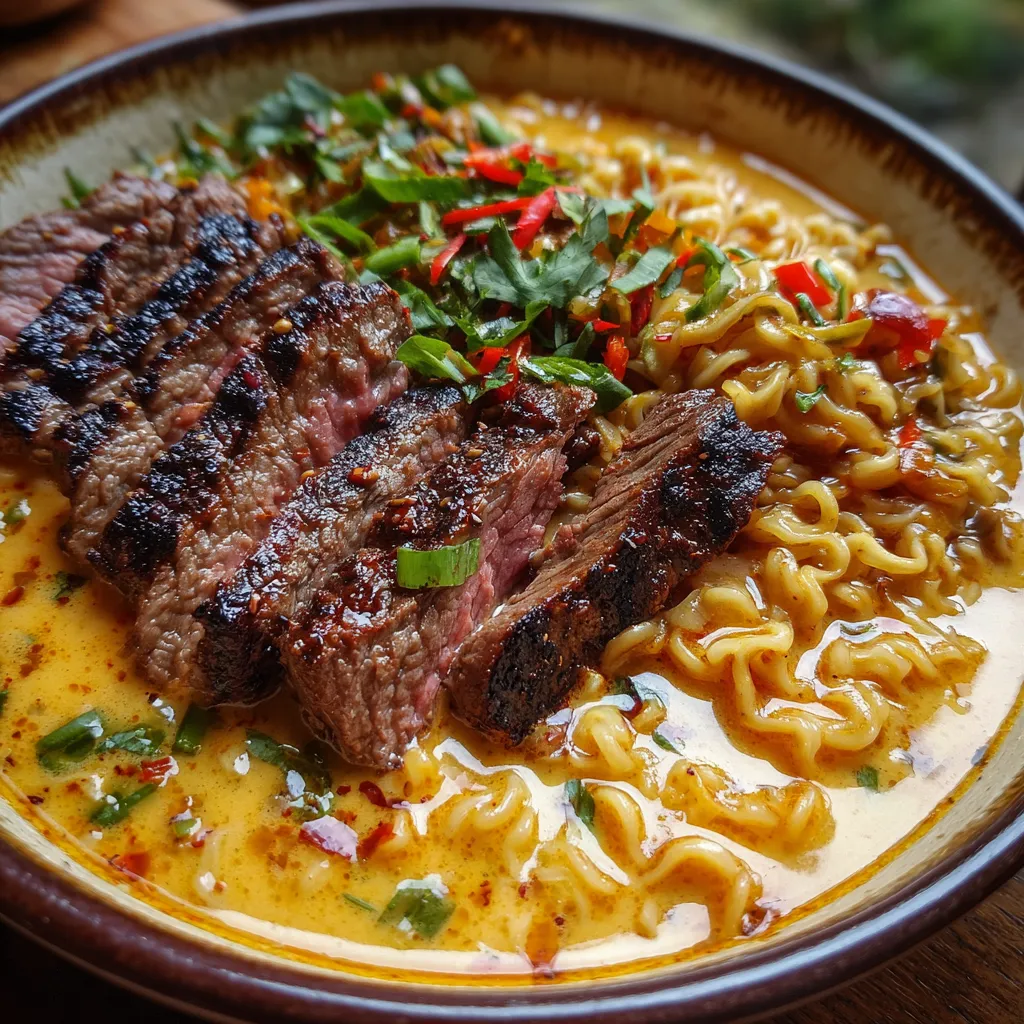

Spicy Korean Ramen with Grilled Beef & Creamy Sauce
Description
This ramen sings with smoky char from marinated ribeye, a nose-tingling broth laced with gochujang, chewy noodles, crisp veggies, and a velvety chili-cream ribbon for a playful heat-and-cool contrast.
Ingredients
Instructions
-
Marinate the beef:
-
- Pat the steak dry with paper towels and place it in a shallow dish or resealable bag.
-
- In a bowl, mix soy sauce, mirin, sesame oil, gochujang, gochugaru, brown sugar, minced garlic, grated ginger, and a pinch of black pepper until smooth.
-
- Pour the marinade over the steak, coating all sides well. Cover and marinate in the fridge for at least 30 minutes, ideally 1–2 hours. If time allows, flip the steak halfway.
-
Prepare the creamy spicy sauce:
-
- In a small bowl, combine mayonnaise, sour cream or yogurt, heavy cream or milk, gochujang, sriracha (if using), lime juice or rice vinegar, sugar or honey, and a pinch of salt.
-
- Whisk until smooth and drizzleable. Adjust thickness with a bit more milk or cream if needed; adjust heat with more gochujang or sriracha.
-
- Cover and chill in the refrigerator so the flavors meld while you prepare the rest.
-
Prepare vegetables and toppings:
-
- Soft-boil the eggs: Bring a small pot of water to a boil, gently lower in the eggs, cook 6–7 minutes, then transfer to ice water. Peel when cool and set aside.
-
- Wash and chop the napa cabbage or bok choy into bite-sized pieces.
-
- Slice mushrooms, green onions, and chili. Julienne the carrot.
-
- If using bean sprouts, rinse and blanch them in boiling water for 30 seconds, then drain.
-
- Cut the seaweed sheet into thin strips with kitchen scissors. Set all toppings aside for quick assembly later.
-
Make the spicy ramen broth:
-
- In a medium or large pot, heat 1 tbsp neutral oil over medium heat.
-
- Add the sliced garlic and ginger. Sauté for 30–60 seconds until fragrant but not browned.
-
- Stir in gochujang and gochugaru. Cook for 30 seconds to 1 minute, stirring constantly, until the paste darkens slightly and becomes fragrant.
-
- Pour in the broth and water, stirring to dissolve the chili paste mixture completely.
-
- Add soy sauce, fish sauce (if using), sugar, and rice vinegar. Bring to a gentle boil, then lower to a simmer.
-
- Simmer for 8–10 minutes to let the flavors develop. Taste and adjust: add more soy for saltiness, more gochugaru for heat, or a pinch of sugar if too sharp.
-
- Right before serving, stir in toasted sesame oil and keep the broth warm over low heat.
-
Grill or sear the marinated beef:
-
- Remove the steak from the fridge 15 minutes before cooking so it comes closer to room temperature.
-
- For outdoor grill: Preheat to medium-high. Oil the grates lightly. Grill the steak 3–4 minutes per side for medium-rare, or to your liking, depending on thickness.
-
- For stovetop: Heat a grill pan or heavy skillet (cast iron preferred) over medium-high until very hot. Add a thin layer of neutral oil. Sear the steak 3–4 minutes per side, letting it develop a good char without moving it too much.
-
- Once cooked to your desired doneness, transfer the steak to a cutting board. Let it rest 5–10 minutes to retain juices.
-
- Slice the steak thinly against the grain into bite-sized strips.
-
Cook the ramen noodles and vegetables:
-
- In a separate pot, bring water to a boil for the noodles.
-
- Add the ramen noodles and cook according to package instructions until just al dente (usually 2–3 minutes for fresh, slightly longer for dried). Do not overcook; they will sit in hot broth.
-
- In the last minute of noodle cooking, add the chopped napa cabbage or bok choy and sliced mushrooms to quickly blanch them.
-
- Drain the noodles and vegetables together, then divide them evenly between 2 large ramen bowls.
-
Assemble the ramen bowls:
-
- Ladle the hot spicy Korean broth over the noodles and vegetables in each bowl, just enough to comfortably cover.
-
- Arrange slices of grilled beef on top of each bowl in a fan or small mound.
-
- Add half a soft-boiled egg (or a whole egg per bowl if you like) to each bowl.
-
- Top with bean sprouts, carrot, green onion, chili slices, seaweed strips, and a sprinkle of toasted sesame seeds.
-
- Generously drizzle the creamy spicy sauce over the beef and part of the noodles in each bowl, creating a decorative swirl or zig-zag on top.
-
Serve:
-
- Serve the ramen immediately while piping hot, with extra creamy sauce, lime wedges, and chili flakes on the side for personal adjustment.
-
- Encourage mixing some of the creamy sauce into the broth as you eat; it will turn the soup rich, slightly tangy, and luxuriously smooth.
Note
- For a lighter version, use Greek yogurt instead of mayonnaise for part of the creamy sauce and use leaner cuts of beef like flank steak.
- For extra umami, add a small piece of dried kelp (kombu) or a few dried anchovies to the broth while simmering, then remove before serving.
- To make it vegetarian, swap the beef broth for vegetable broth, skip the beef and fish sauce, and top with grilled tofu or king oyster mushrooms.
- For deeper flavor in the beef, marinate up to 8 hours in the fridge; just reduce the salt slightly to avoid over-seasoning.
- For restaurant-style presentation, use wide, deep bowls, arrange toppings in separate colorful sections, and finish with a final drizzle of sesame oil and a few extra sesame seeds.

