

Sun-Dried Tomato Eggplant Ricotta Pasta is a vibrant weeknight dinner that feels both cozy and special. Creamy ricotta coats al dente penne, studded with chewy sun-dried tomatoes and tender eggplant, then finished with fragrant basil in a garlicky broth. Each bite balances tangy, smoky, and silky goodness—an easy, intermediate-level recipe perfect for anyone craving a vegetarian twist on classic pasta night. Dive in and let this colorful bowl become your next kitchen favorite!
Key Ingredients
Before you get cooking, let’s meet the stars of this dish and see how each one brings its magic:
- 12 ounces penne pasta: The sturdy noodles hold onto every bit of creamy ricotta and flavorful sauce.
- 1 medium eggplant: Cubed for a meaty texture that soaks up all those garlicky, tangy flavors.
- 2 tablespoons olive oil: Your sauté hero, helping onions and eggplant caramelize to golden perfection.
- 1 small onion: Chopped finely for sweet, savory depth as the base of the sauce.
- 3 cloves garlic: Minced to infuse the entire dish with warm, aromatic notes.
- 4 ounces sun-dried tomatoes: Chopped and concentrated for bursts of tangy, smoky flavor.
- 1 cup ricotta cheese: Velvety creaminess that transforms this into a luxuriously smooth sauce.
- 1/4 cup grated Parmesan cheese: Savory saltiness and nuttiness to finish the pasta with extra umami.
- 1/2 cup vegetable broth: Keeps everything saucy while adding subtle vegetal depth.
- 1/4 cup fresh basil leaves: Torn for bright, herbal freshness in every forkful.
- 1/2 teaspoon red pepper flakes: A gentle hint of heat that wakes up the palate.
- Salt to taste: Balances and enhances all the other flavors.
- Black pepper to taste: Adds a final layer of warm, earthy spice.
How To Make Sun-Dried Tomato Eggplant Ricotta Pasta
This recipe comes together in a few simple stages: salting and browning the eggplant to remove bitterness and build flavor, cooking pasta to al dente perfection, and blending everything into a creamy, dreamy sauce. Follow each step closely to create a pasta that’s rich, tangy, and satisfying.
1. Cut the eggplant into 1-inch cubes, sprinkle with salt, and let sit in a colander for 15 minutes to draw out moisture. Rinse under cold water, then pat completely dry with paper towels to ensure even browning in the skillet.
2. Bring a large pot of salted water to a rolling boil. Cook the penne according to package instructions until al dente, about 9–11 minutes. Before draining, scoop out and reserve 1/2 cup of the pasta water for your sauce, then drain the noodles.
3. While the pasta cooks, heat 2 tablespoons of olive oil in a large skillet over medium heat. Add the chopped onion and sauté until it becomes translucent and lightly golden, about 5 minutes, stirring occasionally.
4. Add the minced garlic and red pepper flakes to the skillet. Cook for 1 minute, stirring constantly, until the garlic is fragrant but not browned, to avoid bitterness.
5. Stir in the diced eggplant and cook in a single layer, stirring every couple of minutes. After about 7 minutes, the cubes should be tender and develop golden-brown edges.
6. Chop the sun-dried tomatoes into bite-size pieces and add them to the skillet. Pour in the vegetable broth, then simmer for 3 minutes to soften the tomatoes and concentrate their tangy flavor.
7. Lower the heat, then stir in the ricotta cheese along with half of the reserved pasta water. Mix until the sauce is silky and smooth, seasoning with salt and black pepper to taste.
8. Add the drained penne to the sauce, tossing well to coat every noodle. If the sauce seems too thick, stir in more reserved pasta water until you reach your desired consistency.
9. Remove the skillet from heat and fold in the grated Parmesan and torn basil leaves, letting residual heat melt the cheese and wilt the herbs gently.
10. Serve the pasta warm, garnished with extra basil and a sprinkle of Parmesan if you like, for an extra pop of flavor and color.
Serving Suggestions
Once your Sun-Dried Tomato Eggplant Ricotta Pasta is ready, the fun part is deciding how to present it. This dish shines on its own, but a few thoughtful sides can elevate the meal into a true feast. Here are some ideas to complement the creamy, tangy flavors and turn dinner into a memorable gathering:
- Serve with crusty garlic bread to soak up every last drop of sauce—just brush slices with olive oil, garlic, and herbs, then toast until golden.
- Pair with a simple arugula salad dressed with lemon juice, olive oil, and shaved Parmesan for a peppery contrast.
- Sprinkle toasted pine nuts on top for a crunchy texture that plays nicely against the silky ricotta.
- Offer a side of grilled vegetables, like zucchini and bell peppers, for extra color and a smoky counterpoint.
Tips For Perfect Sun-Dried Tomato Eggplant Ricotta Pasta
Getting each element just right means the flavors really sing together. Here are a few friendly pointers and smart swaps to make this recipe truly your own:
- For a smoky twist, roast the eggplant cubes under the broiler before adding to the skillet.
- Leftovers keep well in an airtight container in the refrigerator for up to 3 days.
- Substitute spinach or kale for basil to vary the greens and add extra nutrition.
- Add toasted pine nuts on top for extra crunch and flavor.
How To Store It
Proper storage ensures your Sun-Dried Tomato Eggplant Ricotta Pasta stays fresh and creamy if you have leftovers—or if you want to prep in advance. Follow these simple methods to lock in flavor and texture:
- Refrigerate in an airtight container for up to 3 days; seal tightly to prevent drying out.
- Reheat gently in a skillet over low heat with a splash of broth or reserved pasta water to revive the sauce’s creaminess.
- Freeze in a freezer-safe container for up to one month; leave some headspace for expansion.
- Thaw overnight in the refrigerator before reheating, then stir well to recombine any separated sauce.
Frequently Asked Questions
Here are quick answers to the most common questions about making this creamy, tangy pasta dish:
- How do I remove excess moisture and bitterness from the eggplant before cooking?
Cut the eggplant into 1-inch cubes, sprinkle them evenly with salt, and let them rest in a colander for about 15 minutes. The salt draws out moisture and any bitter compounds. Rinse the cubes under cold water, pat them completely dry with paper towels, and they’re ready to brown in the skillet.
- How do I know when the eggplant is perfectly tender and lightly browned?
Heat your skillet over medium heat and add the salted, dried eggplant cubes in a single layer. Stir occasionally so each side gets direct contact with the pan. After about 6 to 8 minutes, you’ll see golden edges and the cubes will yield easily when pierced with a fork—that indicates they’re tender and ready for the next step.
- What can I do if my sauce turns out too thin or too thick?
If the sauce is too thin, let it simmer a minute longer to reduce excess liquid or sprinkle in a little more Parmesan, which helps thicken. If it’s too thick, gradually whisk in additional reserved pasta water or a splash of vegetable broth until you reach the desired creamy consistency.
- What’s the best way to prepare and incorporate sun-dried tomatoes?
Chop the sun-dried tomatoes into bite-size pieces so they distribute evenly. Add them to the skillet after the eggplant has browned and pour in the vegetable broth. Simmering for about three minutes softens the tomatoes and infuses the sauce with their concentrated flavor.
- How can I achieve maximum creaminess with the ricotta cheese?
Lower the heat before adding the ricotta and stir in half of your reserved pasta water, blending until the mixture is smooth. The gentle heat prevents curdling, and the starchy pasta water helps the cheese coat every noodle. Add more water or broth as needed until the sauce envelops the pasta in a silky layer.
- How long can I store leftovers, and what’s the best method for reheating?
Store any leftovers in an airtight container in the refrigerator for up to three days. To reheat, warm the pasta gently in a skillet over low heat with a splash of broth or pasta water to restore creaminess, stirring occasionally until heated through.
- Can I add a smoky flavor as suggested in the notes?
Yes. After salting and drying the eggplant cubes, spread them on a baking sheet and broil for 5 to 7 minutes, turning once, until they develop charred spots. Then proceed with the recipe in the skillet for a rich, smoky undertone.
- What can I substitute for fresh basil if I don’t have any?
You can swap in fresh spinach or chopped kale at the final stage. Stir the greens into the hot pasta just before serving so they wilt gently, providing a slightly different flavor and extra nutrition while maintaining the integrity of the dish.
What Makes This Special
This Sun-Dried Tomato Eggplant Ricotta Pasta hits all the right notes: creamy, tangy, smoky, and fresh, thanks to that dreamy ricotta-basil blend and sun-dried tomato punch. It works because the eggplant’s meaty texture, the al dente penne, and the luscious sauce all complement each other in a medley of flavors. Plus, it’s versatile—prep ahead, swap greens, or add your favorite crunch. Feel free to print and save this recipe for cozy dinners ahead, and drop a comment if you give it a whirl or have any questions!
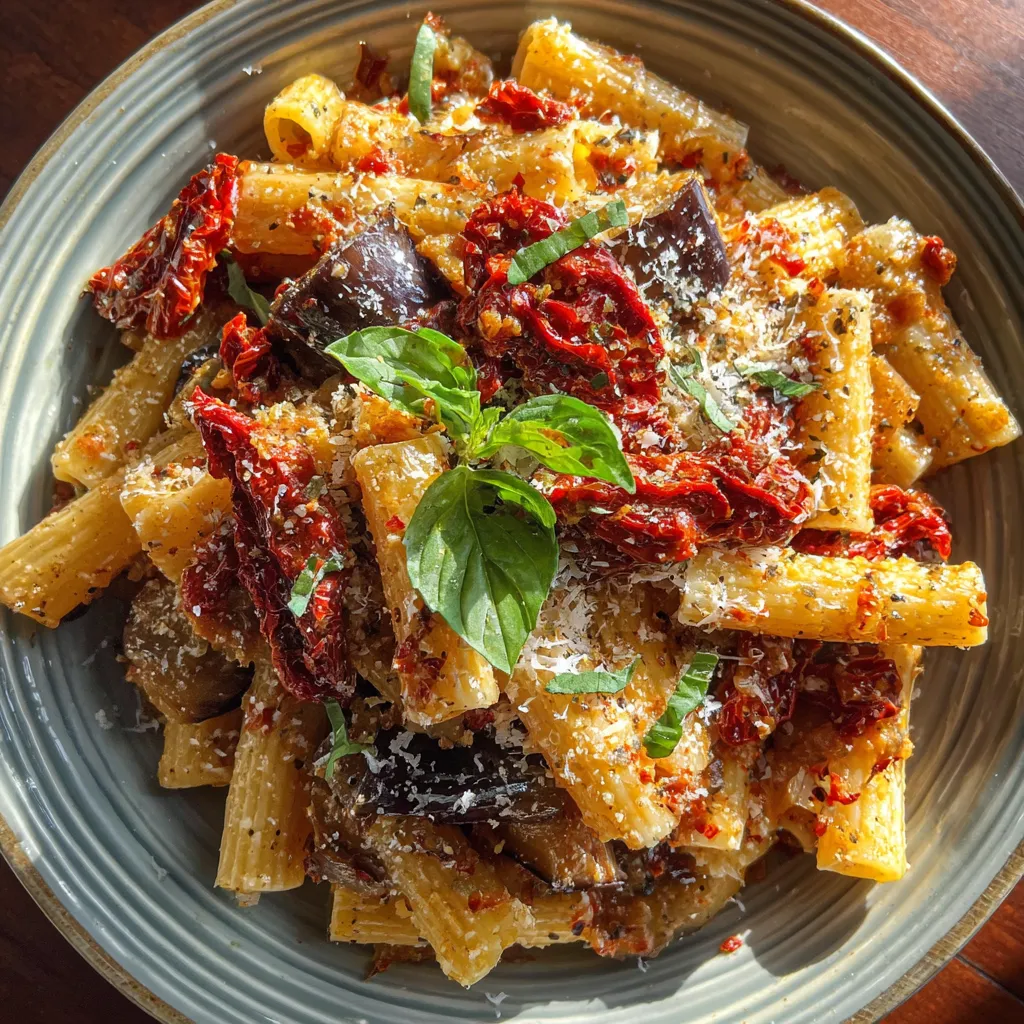

Sun-Dried Tomato Eggplant Ricotta Pasta
Description
Velvety ricotta mingles with chewy sun-dried tomatoes and caramelized eggplant, all tossed with penne in a fragrant garlic-basil sauce. Each bite balances tangy, smoky, and creamy flavors for a cozy dinner treat.
Ingredients
Instructions
-
Cut the eggplant into 1-inch cubes, sprinkle with salt, and let sit in a colander for 15 minutes to draw out moisture. Rinse and pat dry.
-
Bring a large pot of salted water to a boil, cook the penne according to package instructions until al dente, then reserve 1/2 cup pasta water and drain.
-
While pasta cooks, heat olive oil in a large skillet over medium heat. Add chopped onion and sauté until translucent, about 5 minutes.
-
Add minced garlic and red pepper flakes, cook for 1 minute until fragrant.
-
Stir in diced eggplant and cook until tender and lightly browned, about 7 minutes.
-
Chop sun-dried tomatoes and add to the skillet along with vegetable broth. Simmer for 3 minutes.
-
Lower heat, add ricotta cheese and half of the reserved pasta water, stirring until creamy. Season with salt and black pepper.
-
Toss cooked penne into the sauce, adding more pasta water if needed to reach desired consistency.
-
Remove from heat, stir in grated Parmesan and torn basil leaves.
-
Serve warm, garnished with extra basil and a sprinkle of Parmesan if desired.
Note
- For a smoky twist, roast the eggplant cubes under the broiler before adding to the skillet.
- Leftovers keep well in an airtight container in the refrigerator for up to 3 days.
- Substitute spinach or kale for basil to vary the greens.
- Add toasted pine nuts on top for extra crunch and flavor.

