

The Thai Peanut Chicken Buddha Bowl turns mealtime into a festival of color and crunch. Tender chicken strips marinated in soy and lime sizzle to golden perfection, then mingle with crisp cabbage, carrots, and edamame under a creamy peanut sauce, crowned with cilantro, peanuts, and a squeeze of lime. This vibrant bowl is as fun to assemble as it is to eat—perfect for spicing up lunch or meal prep with a burst of Thai-inspired flavor.
Key Ingredients
Here’s a quick look at the essentials that make this Buddha bowl pop with flavor and texture:
- 1 lb (450 g) boneless, skinless chicken breasts or thighs: Tender protein that soaks up the zesty marinade and browns beautifully in the pan.
- 1 tbsp soy sauce (or tamari for gluten-free): Provides savory umami in both the chicken marinade and peanut sauce.
- 1 tbsp lime juice: Adds bright acidity to balance richness in the chicken and sauce.
- 1 tbsp neutral oil (canola, avocado, or vegetable): Helps carry flavors in the marinade and prevents sticking during cooking.
- 1 tsp sesame oil: Infuses a subtle nutty aroma into the chicken and peanut sauce.
- 2 cloves garlic, minced: Delivers a pungent kick in the marinade and sauce for depth of flavor.
- 1 tsp fresh ginger, finely grated: Lends warmth and a touch of spice to both chicken and peanut dressing.
- 1/2 tsp ground coriander (optional): Offers a citrusy, earthy note to the chicken.
- 1/2 tsp smoked or sweet paprika: Brings gentle smokiness and color to the chicken.
- 1/4 tsp black pepper: Provides a mild heat that rounds out the marinade.
- 1/2 tsp salt (adjust to taste): Enhances all the other flavors in the chicken.
- 1/3 cup creamy peanut butter: The rich base of the Thai-inspired sauce that ties everything together.
- 2 tbsp soy sauce (or tamari for gluten-free): Adds salty depth to the peanut sauce.
- 1–2 tbsp lime juice (to taste): Balances the sauce with fresh acidity.
- 1–2 tbsp honey or maple syrup (to taste): Introduces a touch of sweetness to harmonize the heat.
- 1 tbsp rice vinegar (or extra lime juice): Boosts tanginess in the peanut dressing.
- 1–2 tsp sriracha or chili garlic sauce: Controls the spice level in the sauce.
- 1 clove garlic, finely minced or grated: Intensifies the sauce’s savory punch.
- 1 tsp fresh ginger, finely grated: Adds a zingy warmth to the peanut dressing.
- 3–5 tbsp warm water: Adjusts the sauce to a smooth, pourable consistency.
- 1 tsp sesame oil (optional, for extra flavor): Enriches the peanut sauce with a nutty finish.
- 2 cups cooked brown rice, jasmine rice, or quinoa: The hearty base that soaks up sauces and keeps you full.
- 1 cup shredded purple cabbage (or green cabbage): Offers vibrant crunch and color.
- 1 cup shredded carrots (or matchstick-cut): Adds sweetness and bright orange hue.
- 1 red bell pepper, thinly sliced: Provides juicy crunch and a pop of red.
- 1 small cucumber, halved and thinly sliced: Contributes refreshing coolness.
- 1 cup lightly steamed or microwaved edamame, peas, or broccoli florets: Delivers a tender-crisp green element.
- 1 avocado, sliced or cubed: Brings creamy richness to each bite.
- 2–3 green onions, thinly sliced: Imparts a mild onion flavor and fresh color.
- 1/4 cup roasted peanuts, roughly chopped: Adds extra crunch and nutty contrast.
- Small handful fresh cilantro leaves, roughly chopped: Lifts the bowl with bright herbal notes.
- Lime wedges, for serving: Encourages a final burst of citrus.
- Toasted sesame seeds (optional): Sprinkles of extra nuttiness and texture.
- Extra sriracha or chili sauce (optional): For those who crave more heat.
How To Make Thai Peanut Chicken Buddha Bowl
Bringing this bowl together is easier than you might think—you’ll marinate and cook the chicken, prep your grains and veggies, whip up a silky peanut sauce, then assemble everything in colorful sections for a feast for the eyes and the taste buds.
1. Marinate the chicken: In a medium bowl, combine chicken strips with soy sauce, lime juice, neutral oil, sesame oil, minced garlic, grated ginger, ground coriander, smoked paprika, black pepper, and salt. Toss thoroughly to coat each piece, then cover and let it rest for at least 15–20 minutes at room temperature or up to 4 hours in the fridge for extra flavor.
2. Prepare the base (rice or grains): Cook your chosen grain according to package directions. Once done, fluff with a fork, keep it covered to stay warm, and season with a pinch of salt and a squeeze of lime if desired.
3. Prep the vegetables and toppings: Shred cabbage and carrots (or matchsticks), thinly slice bell pepper and cucumber, steam edamame until bright and tender-crisp, then season lightly. Slice or cube avocado just before assembly, and chop green onions, cilantro, and roasted peanuts.
4. Make the Thai-inspired peanut sauce: Whisk creamy peanut butter with soy sauce, lime juice, honey or maple syrup, rice vinegar, sriracha, minced garlic, grated ginger, and optional sesame oil until smooth. Add warm water one tablespoon at a time, whisking until you reach a pourable consistency. Taste and adjust acidity, sweetness, saltiness, or heat.
5. Cook the chicken: Heat a large skillet over medium-high heat and add a touch of oil if needed. Place chicken strips in a single layer, searing without moving for 2–3 minutes, then flip and cook another 3–5 minutes until internal temperature reaches 165°F (74°C). In the last minute, stir in 2–3 tablespoons of peanut sauce to glaze the chicken, then remove from heat and let rest.
6. Assemble the Buddha bowls: Divide warm rice or quinoa among 3–4 bowls. Arrange cabbage, carrots, bell pepper, cucumber, and edamame in sections around each bowl, then add avocado slices and top with cooked chicken.
7. Add sauce and garnishes: Drizzle each bowl generously with peanut sauce (serve extra on the side). Sprinkle chopped peanuts, green onions, cilantro, and toasted sesame seeds, then place lime wedges and extra sriracha alongside.
8. For meal prep: Portion rice, chicken, and sturdy veggies into airtight containers. Pack avocado, sauce, green onions, cilantro, and cucumber separately to keep fresh. Store in the fridge for up to 3–4 days.
Serving Suggestions
When it’s time to serve, think about color, contrast, and a final flourish of flavor. These ideas will help you present your Buddha bowls like a pro and make them even more enjoyable:
- Serve in wide, shallow bowls so every component shines and guests can scoop up a little bit of everything in one bite.
- Offer extra peanut sauce and sriracha in small ramekins for personalized spice and creaminess levels.
- Present with additional lime wedges and a sprinkle of fresh cilantro on top to keep flavors bright and zesty.
- Pair the bowl with a side of crunchy lettuce wraps or wonton crisps for an extra texture contrast.
Tips For Perfect Thai Peanut Chicken Buddha Bowl
Ready to elevate your Buddha bowl game? A few tweaks and variations can make this recipe feel new every time. Here are some friendly pointers to ensure your bowl is always on point:
- For a vegetarian or vegan version, replace chicken with crispy tofu, tempeh, or chickpeas and use maple syrup or agave instead of honey.
- For gluten-free, use tamari or coconut aminos in place of soy sauce and verify your sriracha or chili sauce label.
- Switch the base to cauliflower rice, mixed greens, or soba noodles for a lighter or heartier feel.
- Add extra crunch with toppings like shredded lettuce, radishes, or pickled onions to surprise your taste buds.
- Save leftover peanut sauce as a dip for veggies, a spread for wraps, or a dressing for other salads and grain bowls.
How To Store It
Storing your Buddha bowl components correctly keeps everything fresh and delicious for days. Here are some smart methods to maintain flavor and texture:
- Refrigerate chicken and grains in airtight containers for up to 4 days; add fresh toppings just before serving.
- Keep the peanut sauce in a sealed jar in the fridge for up to one week to prevent bowl sogginess.
- For longer storage, freeze cooked chicken and rice in freezer-safe bags for up to two months—thaw overnight in the fridge.
- Store avocado and cucumber slices in a sealed container with a squeeze of lime juice to minimize browning, then add on serving day.
Frequently Asked Questions
Here are answers to the questions we hear most about this Buddha bowl:
- How long does it take to prepare and cook the Thai Peanut Chicken Buddha Bowl?
Active prep, including chopping vegetables, marinating for at least 15–20 minutes, cooking grains or quinoa, and whisking the peanut sauce, takes about 30–35 minutes. Cooking the chicken requires another 6–8 minutes, and assembling the bowls adds 5 minutes. Overall, you’re looking at roughly 45 minutes to an hour from start to finish.
- How can I adjust the spice level of the peanut sauce?
The heat in the sauce comes from sriracha or chili garlic sauce. Start with one teaspoon for mild heat, taste, then gradually add up to two teaspoons if you prefer more kick. You can also balance the spice with extra honey or maple syrup if it becomes too fiery. A squeeze more lime juice will brighten and tame the heat as well.
- What substitutions can I make for the protein and base to suit dietary preferences?
For a vegetarian or vegan version, swap the chicken for crispy tofu, tempeh, or roasted chickpeas and use maple syrup or agave instead of honey. To lighten the base, you can use cauliflower rice or mixed greens, and for a heartier twist, try soba noodles. If you need a gluten-free option, choose tamari or coconut aminos in place of soy sauce and verify your chili sauce is gluten-free.
- How should I store and reheat leftovers for meal prep?
Divide the cooked rice or quinoa, chicken, and sturdy veggies (cabbage, carrots, bell pepper, edamame) into airtight containers. Pack avocado, cucumber, cilantro, green onions, and sauce separately to keep them fresh. Store in the refrigerator for up to 3–4 days. Reheat the grain and chicken portion in the microwave or on the stovetop until warm, then add fresh toppings and sauce before serving.
- What’s the best way to achieve a smooth, pourable peanut sauce?
Use creamy peanut butter to start and whisk in the soy sauce, lime juice, sweetener, vinegar, garlic, ginger, and optional sesame oil until the mixture is thick and uniform. Add warm water one tablespoon at a time, whisking after each addition until the sauce coats a spoon yet still pours easily. Adjust sweet, salty, or acidic notes by tasting and adding more honey, soy, or lime juice as needed.
- Can I marinate the chicken longer for deeper flavor, and what is the maximum time?
Yes, marinating longer helps the flavors penetrate the meat. While a minimum of 15–20 minutes at room temperature works well, you can marinate the chicken in the refrigerator for up to 4 hours. Beyond that, the acid in the lime juice can start to alter the texture, so it’s best not to exceed 4 hours.
- What garnishes and extras elevate the presentation and flavor of the bowls?
After assembling the bowls, drizzle additional peanut sauce or sriracha for extra heat. Sprinkle roughly chopped roasted peanuts and toasted sesame seeds for crunch, and scatter fresh cilantro and sliced green onions for bright herbal notes. Serve lime wedges on the side so diners can squeeze fresh lime juice over their bowls for an added zesty finish.
What Makes This Special
This Thai Peanut Chicken Buddha Bowl nails the sweet-savory-spicy balance every time while keeping things fun with layers of color, crunch, and creaminess. It works for meal prep, weeknight dinners, or casual gatherings—plus you can easily swap proteins and bases to suit your mood. Feel free to print this recipe and tuck it into your cookbook for safe keeping. When you give it a whirl, drop a comment below with your tweaks, questions, or high-fives—you know I love hearing how you make it your own!
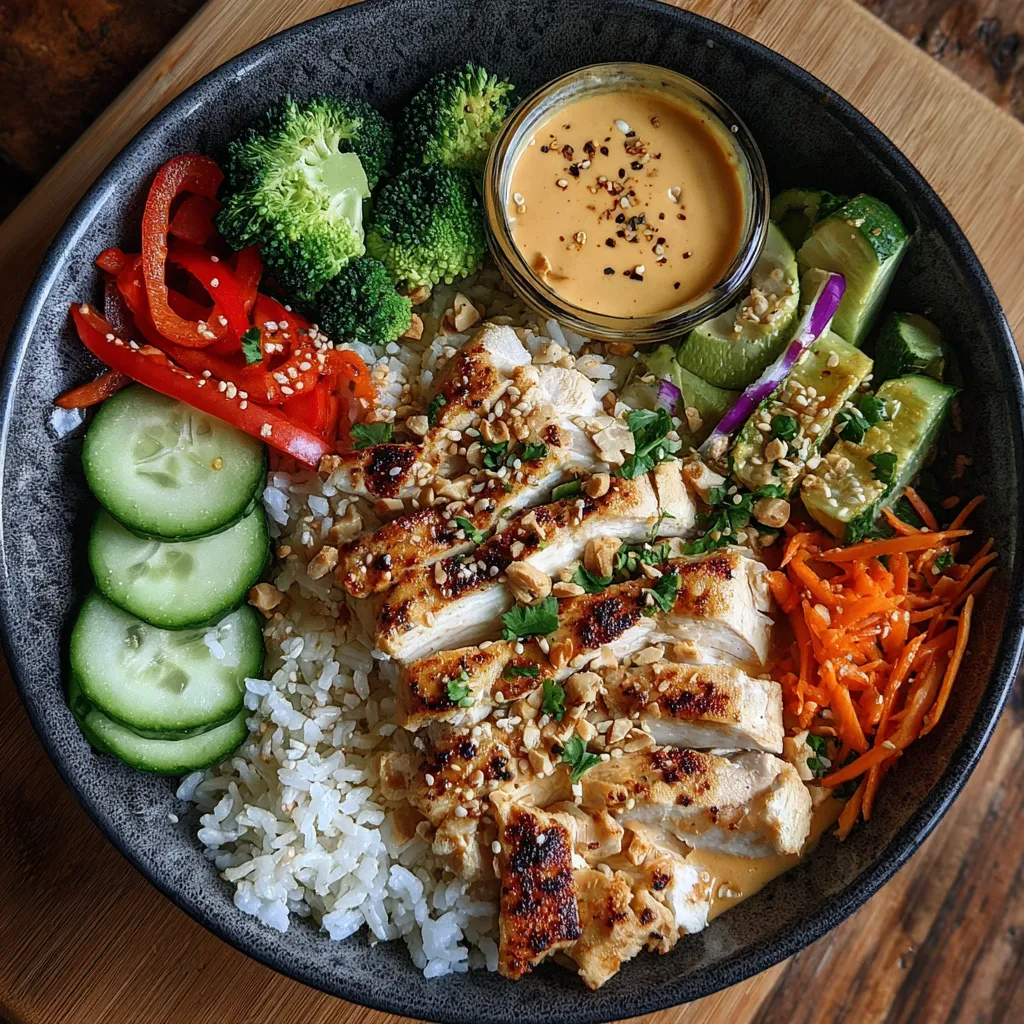

Thai Peanut Chicken Buddha Bowl
Description
Tender chicken strips marinated in soy and lime sizzle to golden perfection, then mingle with crisp cabbage, carrots, and edamame. A creamy peanut sauce ties it all together, crowned with cilantro, peanuts, and a squeeze of lime.
Ingredients
Instructions
-
Marinate the chicken:
-
- Place the chicken strips in a medium bowl.
-
- Add soy sauce, lime juice, neutral oil, sesame oil, minced garlic, grated ginger, ground coriander, paprika, black pepper, and salt.
-
- Toss well to coat all pieces evenly.
-
- Cover and let marinate for at least 15–20 minutes at room temperature, or up to 4 hours in the refrigerator for deeper flavor.
-
Prepare the base (rice or grains):
-
- If you do not already have cooked rice or quinoa, start cooking it now according to package instructions.
-
- When done, fluff with a fork and set aside, covered, to keep warm.
-
- For extra flavor, you can season the warm rice with a pinch of salt and a squeeze of lime juice.
-
Prep the vegetables and toppings:
-
- Shred the cabbage and carrots (or cut into thin matchsticks).
-
- Thinly slice the red bell pepper and cucumber.
-
- Steam or microwave edamame, peas, or broccoli just until bright and tender-crisp; season lightly with salt.
-
- Slice or cube the avocado just before assembling to prevent browning.
-
- Slice the green onions and roughly chop the cilantro.
-
- Roughly chop the roasted peanuts.
-
Make the Thai-inspired peanut sauce:
-
- In a medium bowl, add peanut butter, soy sauce, lime juice, honey or maple syrup, rice vinegar, sriracha or chili garlic sauce, minced garlic, grated ginger, and sesame oil (if using).
-
- Whisk until the mixture is thick and smooth.
-
- Add warm water 1 tablespoon at a time, whisking after each addition, until you reach a smooth, pourable consistency that still coats a spoon (typically 3–5 tablespoons).
-
- Taste and adjust: add more lime for brightness, more sweetener for balance, more soy for saltiness, or more sriracha for heat.
-
Cook the chicken:
-
- Heat a large skillet or nonstick pan over medium-high heat.
-
- When hot, add a small drizzle of oil if your pan needs it.
-
- Add the marinated chicken in a single layer, shaking off excess marinade to avoid overcrowding and steaming.
-
- Cook without moving for 2–3 minutes to develop some color, then flip and continue to cook for another 3–5 minutes, stirring occasionally, until the chicken is cooked through and lightly browned at the edges (internal temperature should reach 165°F / 74°C).
-
- Optional: During the last 1–2 minutes of cooking, add 2–3 tablespoons of the peanut sauce to the pan and toss to glaze the chicken.
-
- Remove from heat and let rest a couple of minutes.
-
Assemble the Buddha bowls:
-
- Divide the warm rice or quinoa among 3–4 serving bowls.
-
- Arrange the shredded cabbage, carrots, bell pepper, cucumber, and edamame (or other veggies) in separate sections around each bowl, creating a colorful, composed look.
-
- Add sliced or cubed avocado to each bowl.
-
- Top each bowl with a generous portion of the cooked chicken.
-
Add sauce and garnishes:
-
- Drizzle each bowl with a generous amount of the peanut sauce. You can serve extra sauce on the side for those who want more.
-
- Sprinkle with chopped peanuts, green onions, cilantro, and toasted sesame seeds if using.
-
- Serve with lime wedges and extra sriracha for added brightness and heat.
-
For meal prep:
-
- If preparing for lunches, divide the rice, chicken, and sturdy veggies (cabbage, carrots, bell pepper, edamame) into airtight containers.
-
- Pack avocado, peanut sauce, green onions, cilantro, and cucumber separately and add them just before eating to keep everything fresh.
-
- The cooked chicken and grains will usually keep well in the refrigerator for up to 3–4 days.
Note
- For a vegetarian or vegan version, replace chicken with crispy tofu, tempeh, or chickpeas and use maple syrup or agave instead of honey.
- For gluten-free, use tamari or coconut aminos in place of soy sauce and check your sriracha or chili sauce label.
- You can switch the base to cauliflower rice, mixed greens, or soba noodles for a different texture and lighter or heartier feel.
- Add crunch with extra toppings like shredded lettuce, radishes, or pickled onions.
- Leftover peanut sauce is great as a dip for veggies, a spread for wraps, or a dressing for other salads and grain bowls.

