

Craving a dish that combines the heartiness of chewy noodles with the vibrant crunch of fresh vegetables? Yaki Udon Noodles deliver that irresistible blend of textures and flavors all in one skillet. Savor the Japanese Street Food Experience with Homemade Yaki Udon Noodles! This vibrant stir-fry dish combines chewy udon noodles, fresh vegetables, and your choice of protein, all coated in a savory sauce that brings out the best flavors. It’s like a festival in your mouth—each bite pops with the subtle sweetness of bell peppers, the earthy goodness of mushrooms, and the gentle zing of ginger and garlic. With soy sauce and oyster sauce weaving through every strand, you’ll find yourself hooked on that perfect balance of saltiness and umami.
What makes this recipe truly special is how effortlessly it fits into your busy week. As a beginner-friendly dinner, you can have hearty Yaki Udon on the table in under 30 minutes—15 minutes of prep and just 10 minutes of cooking. There’s zero rest time needed, so once you’re ready, you dive straight into that sizzle. At around 450 calories per serving and perfectly portioned for two, it’s the ideal quick meal for date nights, roommate dinners, or even a solo feast. Whether you’re keeping it vegetarian with tofu, tossing in juicy shrimp, or shredding tender chicken, Yaki Udon adapts to your cravings. Get ready to bring Japanese street-food magic into your kitchen and share this sizzling sensation with anyone at your table!
KEY INGREDIENTS IN YAKI UDON NOODLE
Before we fire up the wok, let’s get to know the stars of the show. Each ingredient plays a key role in building the flavor, texture, and visual appeal of your Yaki Udon. From the foundation of chewy noodles to the bright pop of fresh veggies, here’s what you’ll need to assemble your ultimate skillet of goodness:
- Udon noodles
Thick and chewy, these wheat-based noodles hold sauce beautifully and provide that signature bite that makes Yaki Udon so comforting.
- Vegetable oil
A neutral oil perfect for stir-frying, it heats quickly and prevents sticking without overpowering the delicate flavors.
- Onion
When sliced and stir-fried, onions soften into a slightly sweet base that balances the rich umami of the sauces.
- Bell pepper
A colorful mix of red, yellow, and green peppers adds crunch, natural sweetness, and vibrant hues that make the dish pop.
- Mushrooms
Their earthy, meaty texture brings depth to the stir-fry and complements both vegetarian and protein-packed versions.
- Carrots
Shredded carrots inject a hint of natural sugar and a lovely orange contrast that brightens every forkful.
- Bean sprouts
Crunchy and light, bean sprouts introduce a refreshing crispness that cuts through the richness of the noodles and sauce.
- Green onions
Chopped and sprinkled on top, they lend a fresh, oniony kick and a burst of color at the very end.
- Garlic
Minced finely, garlic creates an aromatic backbone, infusing the oil with a warm, pungent flavor.
- Ginger
Freshly minced ginger brings a zesty, peppery aroma that livens up the entire dish and pairs beautifully with garlic.
- Soy sauce
A salty umami powerhouse, it seasons the noodles and vegetables while adding a touch of caramelized color.
- Oyster sauce
Slightly sweet and deeply savory, this sauce boosts the umami quotient and gives the stir-fry a glossy finish.
- Sesame oil
Used at the end, it provides a nutty, toasted aroma that perfumes the noodles without making them greasy.
- Salt and pepper
Simple seasonings that you’ll adjust at the end to ensure every bite is perfectly balanced.
- Protein of choice (chicken, shrimp, or tofu)
Whether you prefer tender strips of chicken, plump shrimp, or golden cubes of tofu, this optional addition transforms Yaki Udon into a complete meal.
HOW TO MAKE YAKI UDON NOODLE
Let’s dive into the cooking process! This section will guide you step-by-step through creating that perfect stir-fry, ensuring your udon noodles remain delightfully chewy and your vegetables retain their bright colors and crisp textures.
1. Cook the udon noodles according to the package instructions in a large pot of boiling water. Once they reach that tender-yet-chewy stage, drain them in a colander and rinse under cold water to halt the cooking process. This keeps the noodles springy and prevents them from clumping. Set the noodles aside, ready for the wok.
2. Heat the vegetable oil in a large skillet or wok over medium-high heat. You want the oil shimmering but not smoking—this ensures a quick sear on the ingredients without burning.
3. Add the sliced onion and stir-fry for about 2 minutes until the edges become translucent and begin to soften. Stir constantly to prevent any bits from sticking or browning too quickly.
4. Toss in the bell pepper and mushrooms, then keep stir-frying for an additional 2–3 minutes. You’re looking for the peppers to soften just slightly while the mushrooms release their moisture and start to take on a bit of color.
5. Introduce the shredded carrots and continue to stir-fry for another 2 minutes. Next, stir in the bean sprouts, minced garlic, and ginger. Cook for about 1 minute until you can smell that fragrant garlic-ginger duo—be careful not to let it burn.
6. Add your chosen protein (chicken, shrimp, or tofu) now, spreading it out in the pan so it makes good contact with the surface. Cook until fully done: chicken should turn opaque, shrimp pink, and tofu golden.
7. Slide in the cooked udon noodles. Use tongs to toss everything gently so the noodles intertwine with the vegetables and protein, absorbing any lingering juices.
8. Pour in the soy sauce, oyster sauce, and sesame oil, drizzled evenly around the pan. Toss once more to ensure each strand of noodle and piece of veggie is coated in that glossy, savory sauce.
9. Season with salt and pepper to taste, then continue to stir-fry for an additional 2 minutes, stirring constantly to keep the noodles from sticking and to warm everything through.
10. Garnish with chopped green onions just before serving to add a fresh burst of flavor and color contrast. Serve piping hot for maximum enjoyment.
SERVING SUGGESTIONS FOR YAKI UDON NOODLE
Presenting your Yaki Udon at its best is all about creating harmony on the plate and adding a few finishing touches that elevate the dish from fantastic to unforgettable. Whether you’re hosting friends or simply treating yourself, these ideas will help you serve Yaki Udon with flair. Think about temperature, texture, color, and complementary flavors. A warm bowl will keep the noodles steaming, while a sprinkle of crunchy toppings provides contrast. You can lean into authentic Japanese accompaniments or fuse with ingredients you have on hand. Don’t be afraid to get creative: a squeeze of citrus, a swirl of chili oil, or a side of tangy pickles can transform the meal. Use our suggestions to plate like a pro and watch your dinner companions light up at the first forkful.
- Warm bowls: Preheat your serving bowls in the oven or with hot water so the noodles stay hot longer and steam rises as you serve, enhancing the sensory experience.
- Toasted sesame seeds and chili flakes: Sprinkle a pinch of black or white sesame seeds and a dash of chili flakes on top for extra crunch and a subtle hint of heat that awakens the palate.
- Pickled ginger and miso soup: Offer a small side of pickled ginger for tangy contrast and a cup of miso soup to create a more authentic Japanese-inspired meal that feels complete.
- Fresh herbs and citrus wedges: Set out a bowl of cilantro leaves or shiso, alongside lime or yuzu wedges, so guests can add bright, herbal, or citrusy notes as they like.
HOW TO STORE YAKI UDON NOODLE
Leftovers are a wonderful opportunity to enjoy Yaki Udon all over again, but proper storage is key to preserving the texture and flavor you worked hard to create. Because udon noodles can become soft when sitting in sauce for too long, it’s best to separate components when possible or use quick chilling techniques. If you plan to store the entire dish, cool it down rapidly by spreading it on a baking sheet and transferring it to the fridge in less than an hour. Airtight containers and freezer bags will protect against moisture loss and off-flavors. When reheating, you’ll want to revive the sauce and give the noodles a fresh sizzle to avoid limpness. Below are four reliable methods to keep your Yaki Udon tasting its best, whether it’s enjoying the next-day lunch or planning for a future quick meal.
- Refrigerate in airtight containers: Once cooled completely, transfer the Yaki Udon to airtight glass or BPA-free plastic containers. Store in the fridge for up to 3 days. Make sure there’s minimal headspace to reduce moisture loss.
- Freeze in portioned bags: For longer storage, place cooled Yaki Udon into freezer-safe bags, pressing out excess air before sealing. Lay flat in the freezer for up to 1 month. Thaw in the fridge overnight before reheating.
- Keep sauces separate: If you know you’ll have leftovers, consider storing the noodles and vegetables mixed together, but pour sauces into a separate small jar. This prevents the noodles from becoming too soggy and allows you to reheat with a fresh burst of flavor.
- Reheat with a splash of water: Whether using a skillet or microwave, add a tablespoon of water or broth before reheating. The steam helps loosen the noodles and revives that fresh stir-fry texture without drying out the dish.
CONCLUSION
Yaki Udon Noodle is more than just a quick meal—it’s an invitation to explore the dynamic world of Japanese street food right in your own kitchen. We’ve covered everything from selecting the right udon noodles and vegetables to mastering the stir-fry technique that keeps every element vibrant, chewy, and brimming with flavor. With a total of only 30 minutes from start to finish, this beginner-friendly dinner fits seamlessly into busy schedules, making it perfect for weeknight meals, casual gatherings, or meal prepping for the week. Feel free to swap in your favorite protein—chicken, shrimp, or tofu—or load up on extra veggies for a hearty vegetarian option. And when it comes to serving, little touches like warming your bowls, garnishing with sesame seeds, or offering a side of miso soup can transform Yaki Udon into a restaurant-quality experience. Don’t forget that you can print this article and save it in your recipe collection for a reliable go-to dish any time cravings strike.
We hope this guide inspires you to fire up the wok and get creative with flavors and textures. If you try this recipe, share your results in the comments below—was it as addictive as you imagined? Do you have any twists, like adding a handful of spinach or a drizzle of chili oil, that took your Yaki Udon to the next level? Whether you have questions, need troubleshooting tips, or simply want to tell us how it turned out, we’d love to hear from you. And be sure to check out the FAQ below for answers to common questions about ingredients, substitutions, and cooking techniques. Happy cooking, and here’s to many more flavorful noodle adventures ahead!
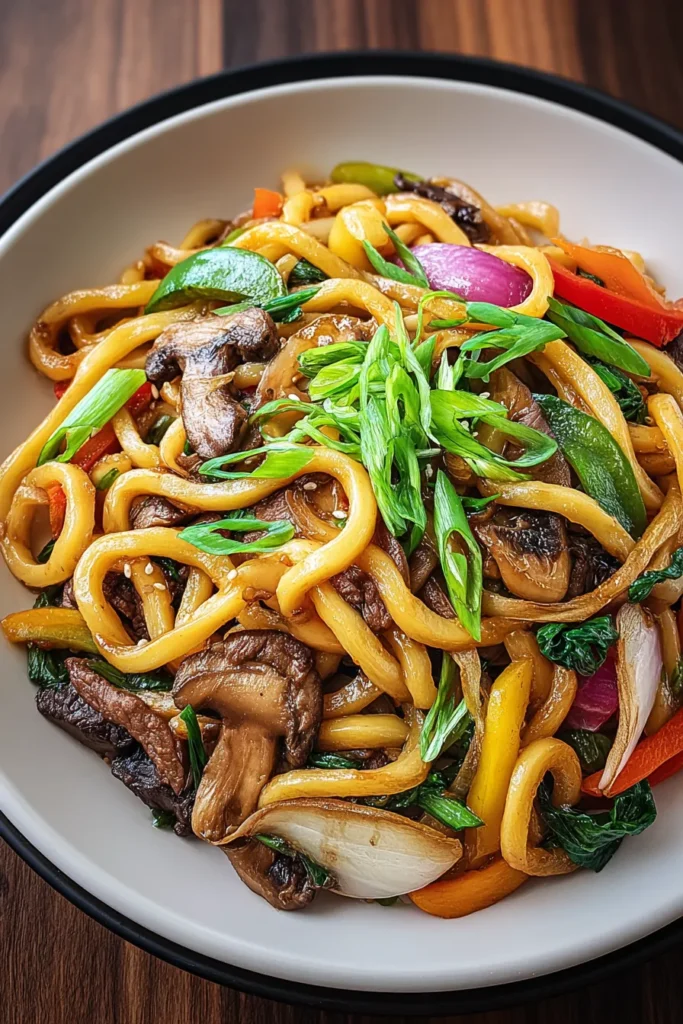

Yaki Udon Noodle
Description
This vibrant stir-fry dish combines chewy udon noodles, fresh vegetables, and your choice of protein, all coated in a savory sauce that brings out the best flavors.
Ingredients
Instructions
-
Begin by cooking the udon noodles according to the package instructions. Once cooked, drain and rinse under cold water to stop the cooking process. Set aside.
-
In a large skillet or wok, heat the vegetable oil over medium-high heat.
-
Add the sliced onion and stir-fry for about 2 minutes until it becomes translucent.
-
Incorporate the sliced bell pepper and mushrooms into the skillet, continuing to stir-fry for an additional 2-3 minutes until they begin to soften.
-
Add the shredded carrots and stir-fry for another 2 minutes, then mix in the bean sprouts, minced garlic, and ginger. Cook for about 1 minute until fragrant.
-
If you are using a protein (chicken, shrimp, or tofu), add it to the skillet now and cook until fully cooked through.
-
Now, add the cooked udon noodles to the skillet. Toss everything together gently to combine.
-
Pour in the soy sauce, oyster sauce, and sesame oil. Toss the ingredients again so that the noodles and vegetables are evenly coated in the sauces.
-
Season with salt and pepper to taste and stir-fry for an additional 2 minutes, ensuring all ingredients are heated through.
-
Finally, garnish the yaki udon with chopped green onions before serving.
Note
- Yaki Udon can be customized with your choice of vegetables and proteins, making it versatile for different dietary preferences.
- The udon noodles can be refrigerated in advance for quick meal prep, cutting down your cooking time.
- Experiment with adding sesame seeds or chili flakes for an extra kick of flavor.
- Consider serving with pickled ginger or a side of miso soup for a more authentic Japanese meal experience.

